

If you ask someone to list the most common colours on a world map, three instantly come to mind: red, white and blue. Nearly 30 independent nations use the colours exclusively on their national flags. It is the most popular colour combination in the world, representing everything from liberty and revolution to oceans and snow.
But why are there so many? The answer is that most of these modern flags did not develop their colours independently. They were inspired by a handful of highly influential maritime powers and revolutionary empires. To make sense of the world’s red, white and blue flags, we can divide them into five distinct historical and regional families.
The Horizontal Tricolours (The Dutch Lineage)

When you see a horizontal red, white and blue flag, you are almost always looking at a descendant of the world’s oldest tricolour: the flag of the Netherlands.
Originally flying as the orange, white and blue Prince’s Flag during the Dutch Revolt in the late 1500s, the top stripe gradually shifted to red by the 17th century. As the Dutch Republic became a global maritime superpower, their simple, highly visible flag became the gold standard for naval design.
- Russia: In the late 17th century, Tsar Peter the Great visited the Netherlands to study shipbuilding. He was so impressed by their naval ensign that he brought the design back to Russia, simply rearranging the stripes into White, Blue and Red.
- The Pan-Slavic Flags: Because Russia became the dominant Slavic power, its white, blue, and red flag inspired a massive wave of Eastern European flags during the 19th and 20th centuries. Today, Serbia, Slovakia, Slovenia, Croatia, and the Czech Republic all use variations of these exact same Pan-Slavic colours.
- Luxembourg: The flag of Luxembourg is nearly identical to the Netherlands, but uses a significantly lighter, brighter shade of blue.
The Vertical Tricolours (The French Lineage)
While the Dutch popularized horizontal stripes, the French Revolution gave the world the vertical tricolour.
Adopted in 1794, the France flag (the Tricolore) combined the traditional red and blue colours of Paris with the royal white of the House of Bourbon. By placing them vertically, it symbolized a radical break from the past, representing equality, liberty, and modern republicanism.
As the French Empire expanded, they exported this vertical, three-colour design across the globe, inspiring countless nations to adopt the layout to signal their own modern independence.
The Crosses (British and Nordic)
In Northern europe, red, white and blue are almost exclusively arranged using intersecting crosses.

- United Kingdom: The Union Jack is a brilliant piece of graphic design that layers three older flags on top of a blue field: England’s red Cross of St. George, Scotland’s white Cross of StFlag of Iceland. Andrew, and Ireland’s red Cross of St. Patrick. Because of the vast reach of the British Empire, this exact colour palette was exported globally, surviving today in the cantons of Australia, New Zealand, and Fiji.
- Norway and Iceland: Both of these Scandinavian nations utilize the Nordic Cross (an off-center cross shifted toward the hoist). Norway uses a blue cross with a white border on a red field. Iceland reverses this, placing a red cross with a white border on a blue field, symbolizing the island’s volcanic fire, ice, and mountains.
Stars, Stripes and Triangles (The Americas)
In North and South America, red, white, and blue flags often use striking geometric shapes, stars, and complex striping to tell their national stories of independence.
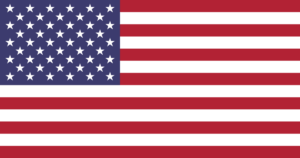
- United States: The Stars and Stripes has served as a massive inspiration for other nations, most notably Liberia, which was founded by freed American slaves and uses a nearly identical layout with a single star.
- Cuba and Puerto Rico: These two Caribbean islands use mirrored versions of the same design. Cuba features blue and white stripes with a red hoist triangle; Puerto Rico (a US territory) features red and white stripes with a blue hoist triangle.
- Chile: Known as the Estrella Solitaria (Lone Star), Chile’s flag features white and red horizontal bands with a blue square in the canton containing a single white star.
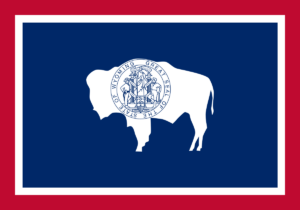
- The US States: At the sub-national level, several US states stick strictly to the red, white, and blue palette. Texas flies the famous “Lone Star Flag,” which predates its statehood and looks similar to Chile’s national banner. Ohio uses these three colours on a swallowtail pennant, making it the only non-rectangular state flag in the United States. Hawaii completely breaks from standard American symbolism by featuring the British Union Jack in its canton alongside eight red, white, and blue stripes. Tennessee and Arkansas also rely exclusively on this classic colour triad to create their bold, highly recognizable geometric patterns.
Asian Innovations (Symmetry and Suns)
While much of the world borrowed from European templates, Asian nations utilized the red, white and blue palette to create entirely unique, highly symbolic layouts.
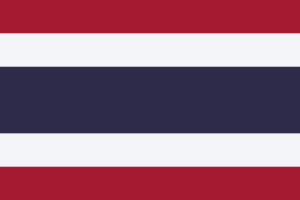
- Thailand: Thailand flies the Trairanga. Adopted in 1917, it features five horizontal stripes of red, white, blue (which is double the width), white, and red. Legend says King Vajiravudh created a perfectly symmetrical design specifically so the flag could never accidentally be flown upside down during times of distress.
- Taiwan (Republic of China): The flag of Taiwan is officially described as “Blue Sky, White Sun, and a Wholly Red Earth.” It features a solid red field with a blue canton containing a 12-pointed white sun, representing the 12 months of the year and the 12 traditional Chinese hours.
- North Korea: Adopted in 1948, this flag features a broad red central stripe (bordered by white fimbriations and blue top/bottom stripes) containing a white circle and a red star.
A Shared Palette, A Unique Story
While they may share the exact same three colours, the red, white and blue flags of the world represent wildly different histories. From the naval dominance of the Dutch and the revolution of the French, to the soaring mountains of Iceland and the deep history of Thailand, these three simple colours have been woven into the fabric of global identity. Our playlist below features many of the world’s nations and regions that exclusively use the 3 colours.