
In the world of heraldry and vexillology, no animal is more respected, or widely used than the lion. For centuries this apex predator has been a symbol of royalty and strength.
What makes this “flag family” interesting is that the lions rarely look the same, some are regal and static, some are aggressive and others carry weapons. Let’s take a roaring tour through the world’s most famous flags featuring lions.
The Lion of Judah: Sri Lanka
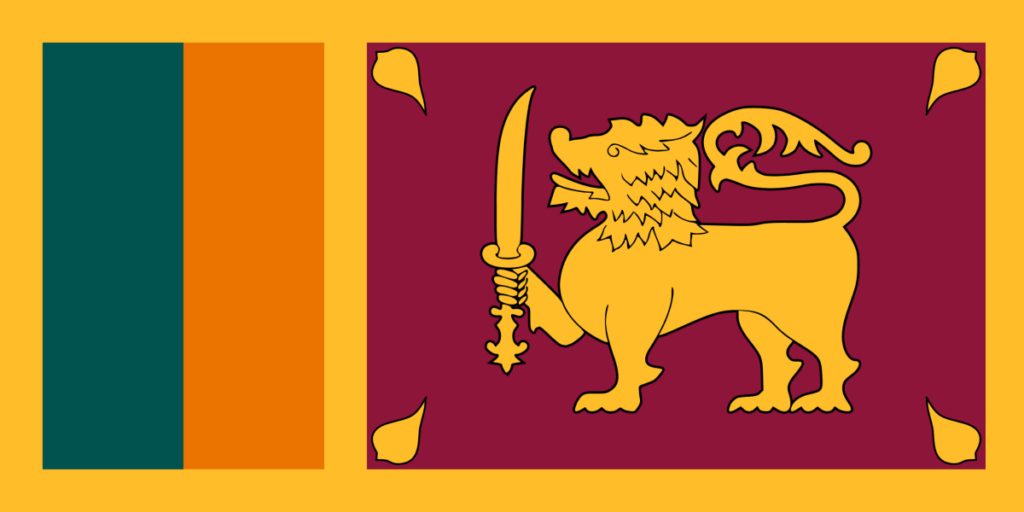
Perhaps the most famous and dominant lion on any national banner belongs to Sri Lanka. On the “Lion Flag,” the right side features a golden lion (Sinha) holding a Kastane sword in its right paw, set against a dark maroon background. This is not a British heraldic symbol, but an ancient, indigenous one.
The lion represents the Sinhalese ethnicity (the majority population of the island), and its sword is a symbol of the nation’s bravery and commitment to justice. The lion’s features hold deep meaning, its beard represents the purity of words and its nose represents intelligence.
Heraldic Roots: European Lions
In Europe, lions on flags are almost exclusively rooted in ancient medieval heraldry, where royal houses used the beast on their shields to project power.
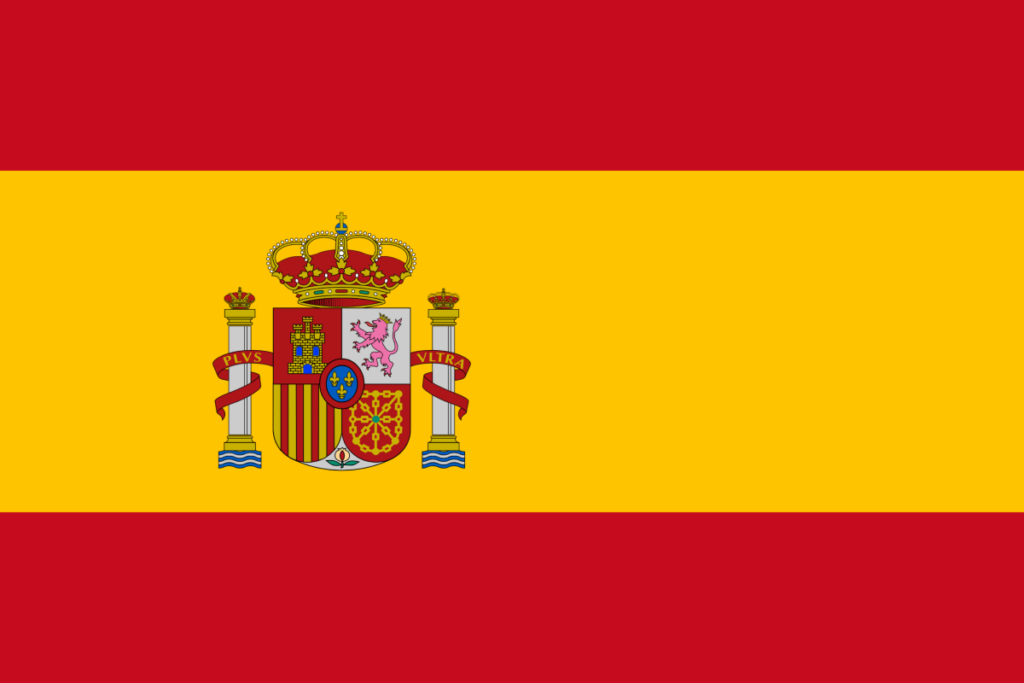
- Spain: The national flag of Spain features its coat of arms slightly offset to the left.
In the upper right quarter of the shield, a pink lion is rearing up on its hind legs (known as rampant), wearing a golden crown. This lion represents the historic Kingdom of León, one of the ancient realms that united to form modern Spain. - Montenegro: The red and gold flag of Montenegro is dominated by a large two-headed golden eagle. On a small shield resting on the eagle’s chest is a golden lion walking forward with one paw raised (passant). This is a traditional symbol of authority, linking the modern state to its historical prince-bishops.
The British Influence: Colonial Crests
Because the lion is the primary national animal of England, it appears on dozens of flags around the world that share a colonial history with the British Empire, usually tucked away inside a regional coat of arms.
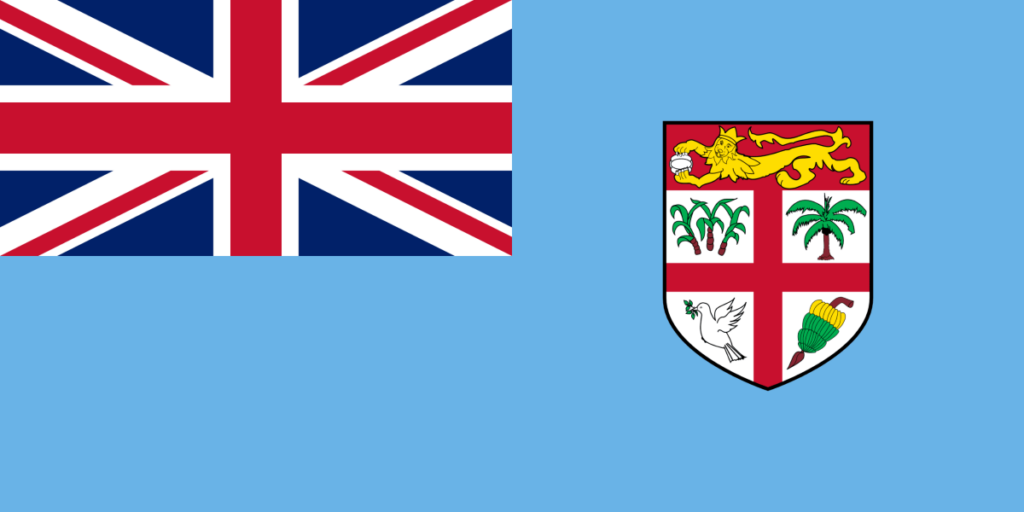
- Fiji: The light blue national flag of Fiji features the British Union Jack in the canton, alongside the Fijian coat of arms on the fly side. At the very top of this shield is a golden British lion in the passant pose. The lion is holding a peeled cocoa pod between its paws, blending colonial heraldry with a vital local agricultural crop.
- Bermuda: Bermuda’s flag features the country’s coat-of-arms with the Sea Venture crashing into a reef. Holding up the maritime shield is a crimson red lion. This red lion represents the ties between this Atlantic territory and the British Crown.
The Channel Islands and Canadian Provinces
Because the lion is the primary national animal of England, it frequently appears on the flags of territories, dependencies and provinces that share a direct historical link to the British Crown.
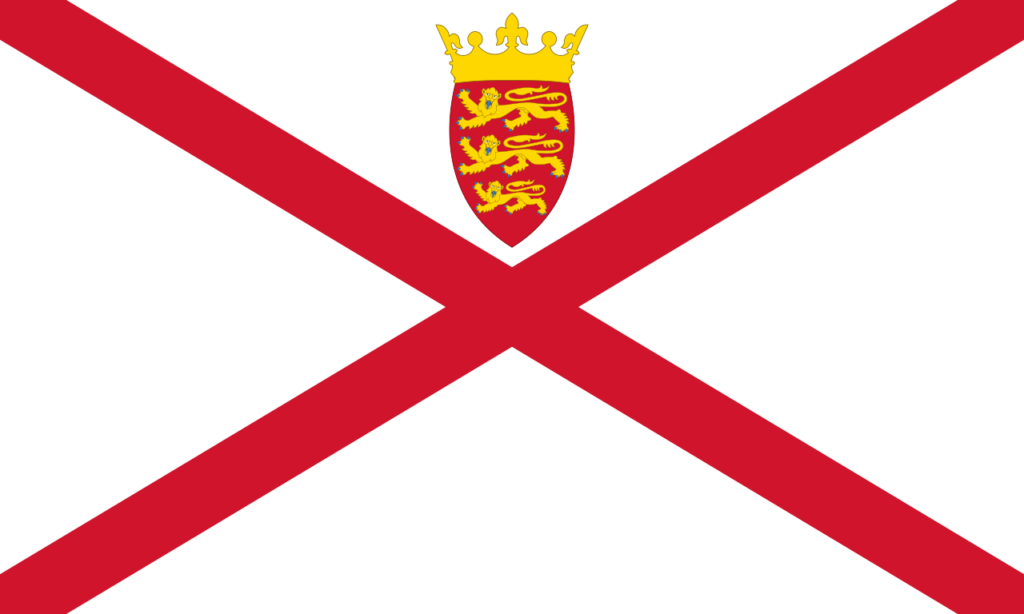
- The Channel Islands: The flags of the Channel Islands heavily feature traditional English lions. The flag of Jersey has a red shield in its upper canton with three golden lions passant guardant, matching the historic royal arms of England. The flag of Sark features two golden lions in its canton and the Alderney flag places a golden lion rampant in the center of its St. George’s cross.
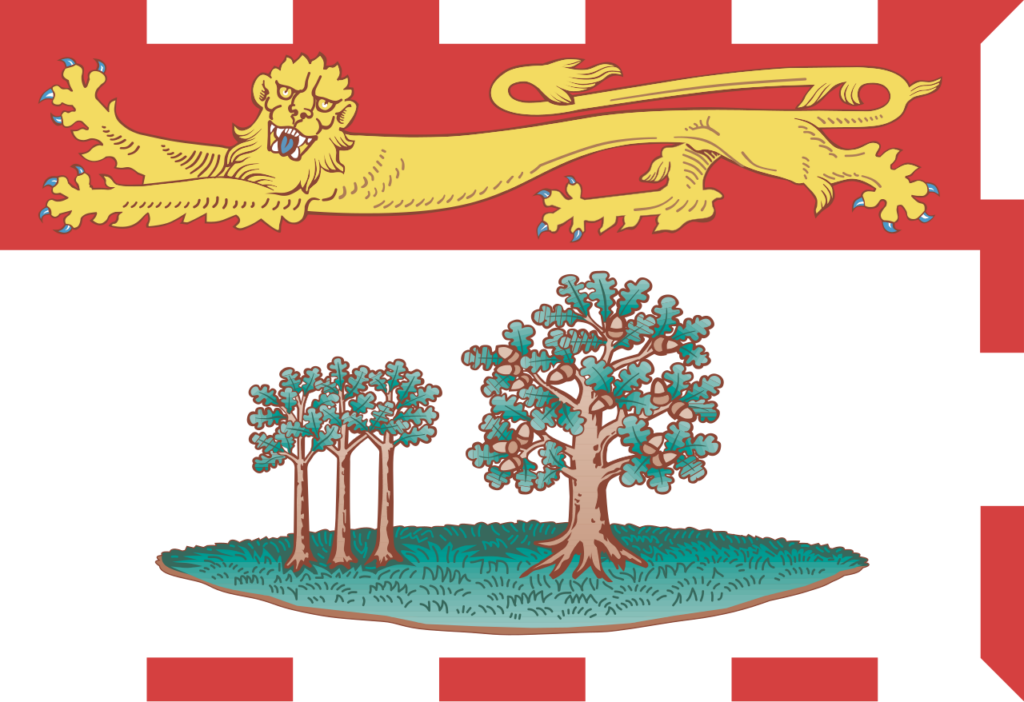
- Prince Edward Island (Canada): Across the Atlantic, this Canadian province proudly displays its royal heritage. At the top third of the Prince Edward Island flag is a golden English lion (passant). It was chosen to honor both King George III and Prince Edward, Duke of Kent (the father of Queen Victoria), after whom the island is named.
What Lions Tell Us About a Nation
When a country places a lion on its flag, it symbolizes history. Whether it represents the ancient indigenous heritage of the Sinhalese people in Sri Lanka, or the medieval royal bloodlines of Spain and Montenegro, the lion is a declaration of courage and unbroken lineage.
Want to learn more about the incredible history behind the world’s most unique flags? Watch our video playlist below.