
Stars are one of the most common symbols in vexillology. From the 50 stars on the flag of the United States to the five stars of China, they usually represent provinces, states, or abstract ideals like unity and freedom.
This flag family takes a more literal approach. Acting as literal compasses, grounding the nation in its specific geographical location on Earth by showing us exactly what their people see when they look up. Let’s turn our gaze to the stars and explore the fascinating flags that feature true constellations.
The Southern Cross: Navigating the Southern Hemisphere
The most famous constellation found on flags is the Crux, commonly known as the Southern Cross. Because this constellation is only fully visible in the Southern Hemisphere, nations use it as a declaration of geographical identity.
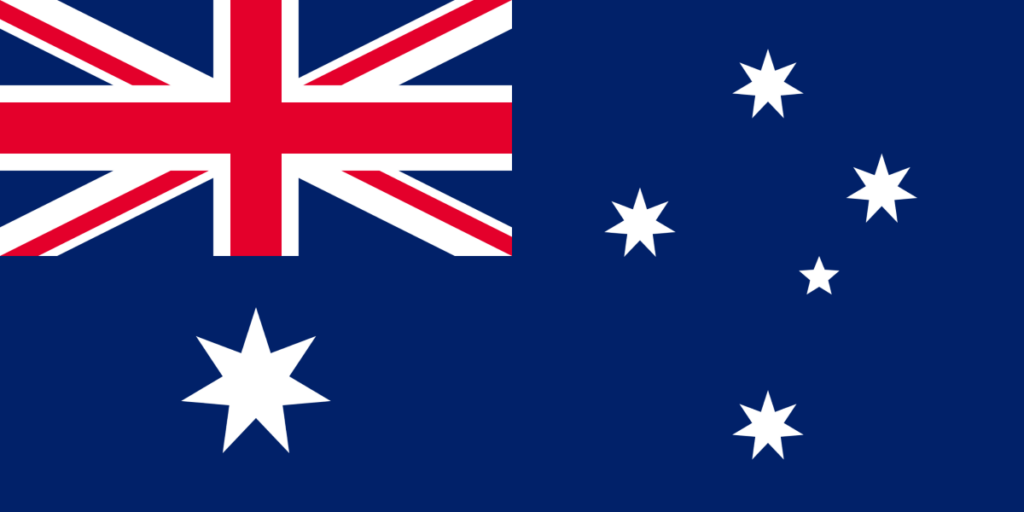
- Australia: The right side of the Australian flag features five white stars representing the Southern Cross (four large seven-pointed stars and one smaller five-pointed star). For early explorers and navigators this constellation was crucial for finding their way across the vast southern oceans and lands.
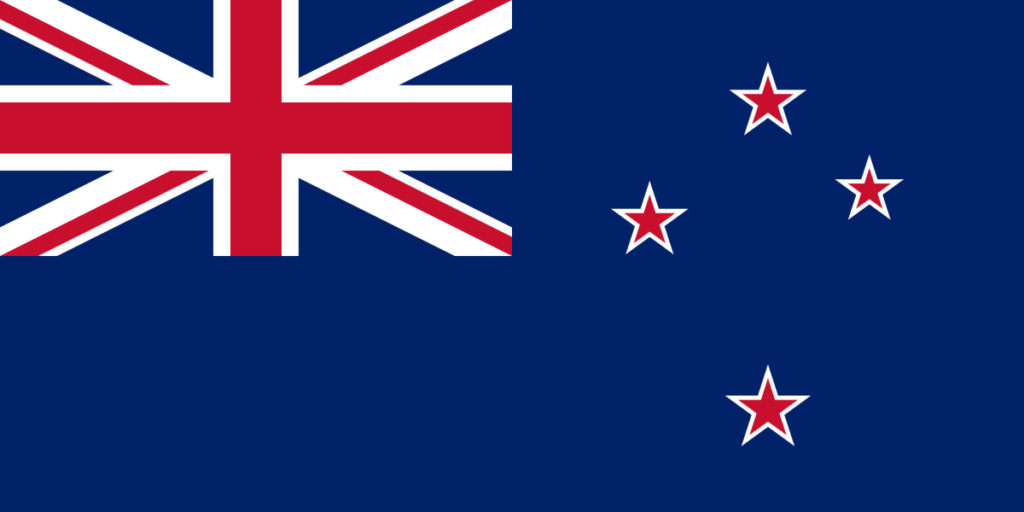
- New Zealand: Often confused with Australia’s flag, the flag of New Zealand also features the Southern Cross. However, it uses only four stars, and they are five-pointed, colored red with a white outline.
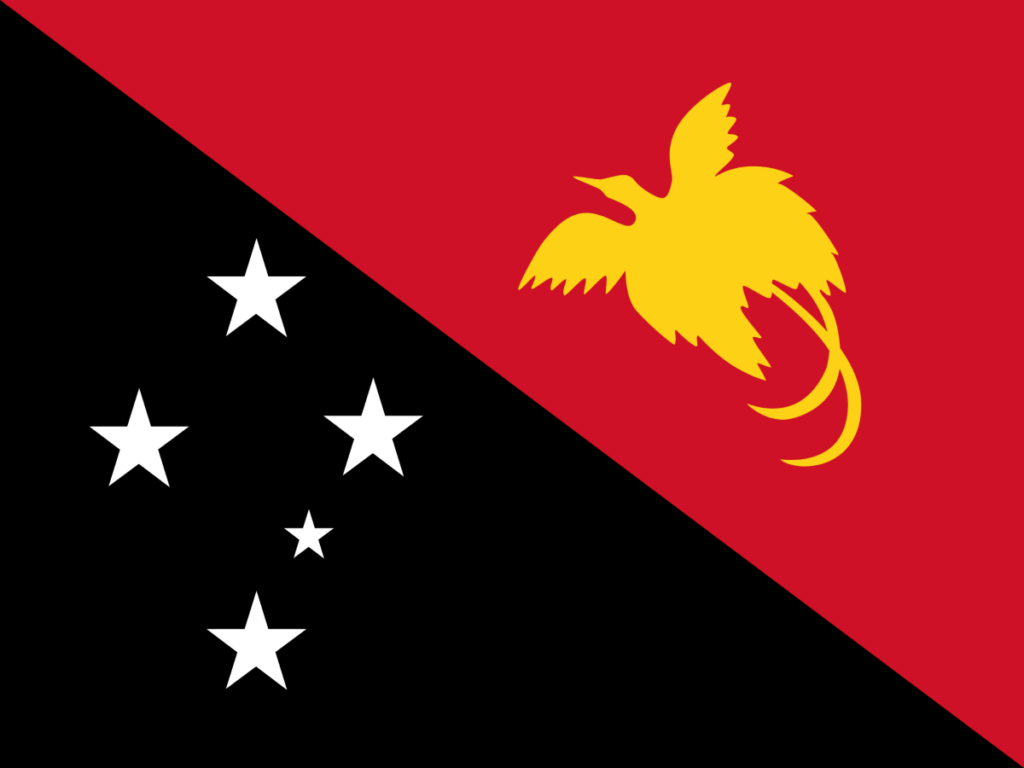
- Papua New Guinea: On the lower black diagonal half of its flag, Papua New Guinea features five crisp white stars mapping the Southern Cross. This contrasts with the golden Bird-of-Paradise flying in the red section above it.
- Samoa: The flag of Samoa features a red field with a blue rectangle in the top left corner (the canton). Inside this blue space the Southern Cross represents the nation’s connection to the rest of the Pacific.
A Snapshot in Time: The Sky Over Brazil
While the Southern Cross appears on several flags, one nation took celestial mapping to an entirely different level of precision.

- Brazil: The blue globe in the center of the Brazilian flag features an astronomically accurate map of the night sky over Rio de Janeiro as it appeared at exactly 8:30 a.m. on November 15, 1889. This was the exact moment the Republic of Brazil was declared. The flag features 27 stars belonging to nine different constellations (including the Southern Cross, Scorpius, and Canis Major). Each star corresponds to a Brazilian state.
The Northern Guides: Ursa Major and the North Star
While the Southern Cross dominates the skies below the equator, the Northern Hemisphere has its own iconic celestial guides. For thousands of years, travelers and explorers have looked to the Great Bear (Ursa Major) and the fixed position of the North Star (Polaris) to find their way across land and sea.

- Alaska (USA): The blue flag of Alaska features eight gold stars: seven forming the Big Dipper (Ursa Major) and an eighth larger star representing the North Star. The Big Dipper symbolizes a bear, an animal central to Alaskan wildlife, the North Star represents its status as the northernmost US state. This enduring design was created by a 13-year-old boy named Benny Benson during a 1927 flag contest.
- Nunavut (Canada): The flag of this large northern Canadian territory features a red inuksuk (a traditional stone land marker) and a single, bright blue star in the upper right corner. This star is Niqirtsuituq, the North Star. For the Inuit people, the North Star is the ultimate navigational guide across the stark, frozen Arctic landscape. It serves as a symbol of physical navigation and the guiding wisdom of community elders.
What Constellations Tell Us About a Nation
When a country places a specific constellation on its flag, it ties its national identity directly to the cosmos. These flags tell a story of ancient navigation and maritime exploration.
They remind us that no matter how borders change on the ground, the stars above remain a constant guide. Want to learn more about the incredible history behind the world’s most unique flags? Watch our video playlist below!