

When we think of animals on flags, we usually picture fierce predators. Lions, eagles and mythical dragons dominate as symbols of military might and royal authority. But what about the animals that actually built a nation’s economy?
This “flag family” skips the predators, instead it honors the domestic livestock and farm animals that fed their people, provided their wool, and plowed their fields. Let’s head to the pastures and explore the flags that proudly feature livestock.
The Cattle and Goats: National Flags
At the national level, farm animals are rare. They do appear, they are usually embedded in a central coat of arms, representing ancient agricultural lineages.
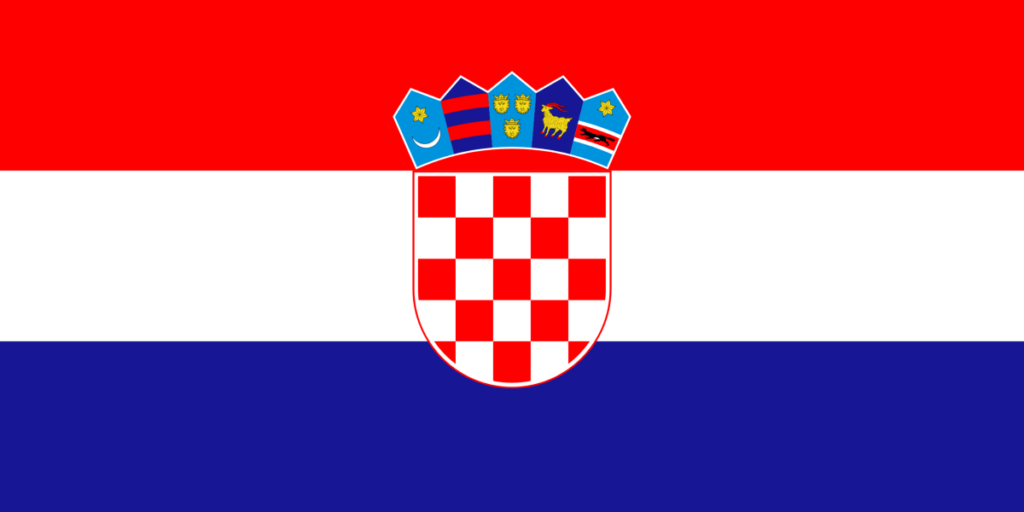
- Croatia: The red-and-white checkerboard shield of Croatia is topped by a “crown” of five smaller shields, representing the country’s historical regions. One shield on the right features a goat with bright red horns and hooves. It represents the region of Istria, where it has served as a symbol of rural agricultural endurance for hundreds of years.
- Andorra: The national flag of this tiny nation in the Pyrenees mountains features a coat of arms divided into four quadrants. The bottom right quadrant displays two red cows with blue horns and collars. These are the cows of Béarn, a historic province in neighboring France, honoring the centuries-old agricultural and political ties between the two regions.
- Moldova: The yellow center stripe of Moldova’s flag features an eagle holding a shield, its focal point is the head of an Aurochs. Now extinct, the Aurochs was a species of large wild cattle that served as the direct ancestor to modern domestic cattle. It has been the traditional symbol of the region since the 14th century.
Sheep and Wool: Regional Flags
Regional and overseas territory flags often have more freedom to highlight local industries, and one island nation in particular highlights this.
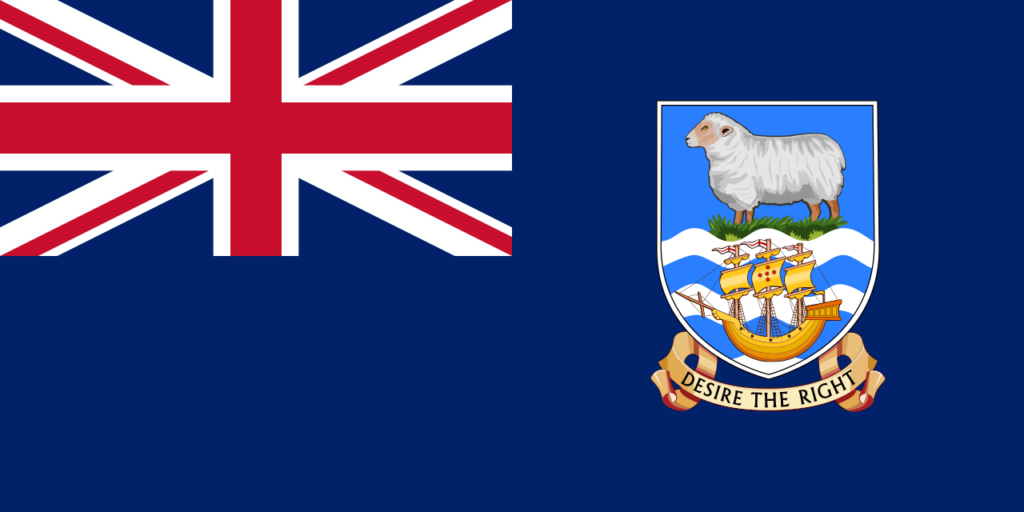
- Falkland Islands: The flag of this British Overseas Territory is the ultimate livestock flag. While it features the standard Union Jack in the canton, the fly side displays the island’s official coat of arms. In its center stands a white sheep on a patch of green tussock grass, This was chosen to represent the island’s wool industry and the farming that has driven the local economy.
The US States: Agricultural Seals
While national flags tend to avoid crowded imagery, US state flags are famous for featuring intricate state seals. Because these seals were designed to showcase local industry, they often contain domestic farm animals.
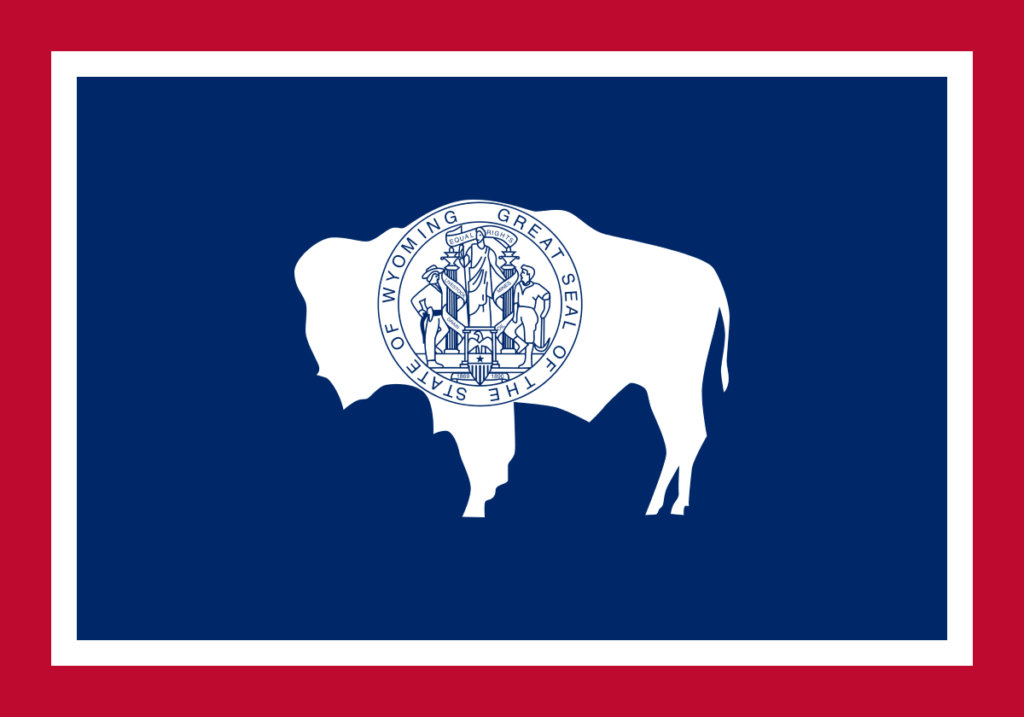
- Wyoming: The white silhouette on the Wyoming flag represents the American bison, the wild monarch of the western plains. This flag acts as a tribute to the ranching industry. The state seal placed on the bison’s ribs represents the Western custom of livestock branding.
- Vermont: The coat of arms on Vermont’s blue flag features a massive pine tree, but standing right next to it is a prominent red cow. This cow is not a background detail; it is there in tribute to the state’s dairy industry.
- Pennsylvania: The flag of Pennsylvania features a central shield supported by two large black draft horses rearing up on their hind legs. Harnessed in red, these workhorses represent the agricultural strength and heavy labor that built the state’s early economy.
If you look closely at the details of other state seals across the country, you will find more tributes to livestock. New Jersey features a horse’s head as the crest of its coat of arms; Kansas features a farmer plowing a field with a team of workhorses; and the seal on the flag of South Dakota features a small herd of cattle grazing near a river.
What Livestock Tells Us About a Nation
Predators on a flag project intimidation, but livestock projects sustenance. When a nation or region places a cow, a sheep, or a workhorse on its flag, it is honoring the daily, grueling reality of rural life.
It is a tribute not to the kings who ruled the land, but to the farmers, the shepherds, and the animals that kept the nation alive. Want to learn more about the history behind the world’s most unique flags? Watch our videos in the playlist below.