
While most flags rely on geometric shapes, celestial bodies, or real-world animals like lions and eagles to project strength, a few reach into the realm of mythological legend. Placing dragons, griffins, and winged horses on their banners, these nations and regions embrace ancient folklore and culture. Let’s step into the realm of legend and explore the flags that feature mythical beasts.
The Dragons: Protectors of the East and West
Dragons are arguably the most famous mythical creatures. The two most prominent examples come from completely different sides of the globe, representing entirely different mythologies.
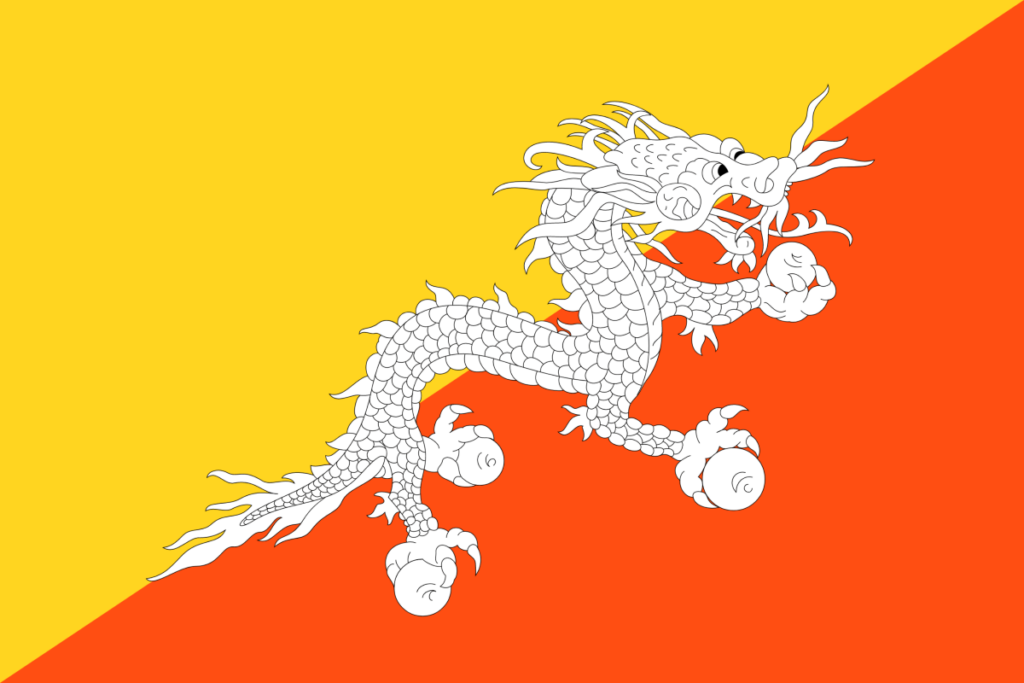
- Bhutan: The national flag of this Himalayan kingdom is divided diagonally into yellow and orange halves, but the focal point is an intricate white dragon snarling in the center. The Druk, or “Thunder Dragon” is a symbol of Bhutanese mythology. The dragon’s white scales represent purity and inner thoughts, while the four jewels it clutches in its claws symbolize the nation’s wealth and perfection.
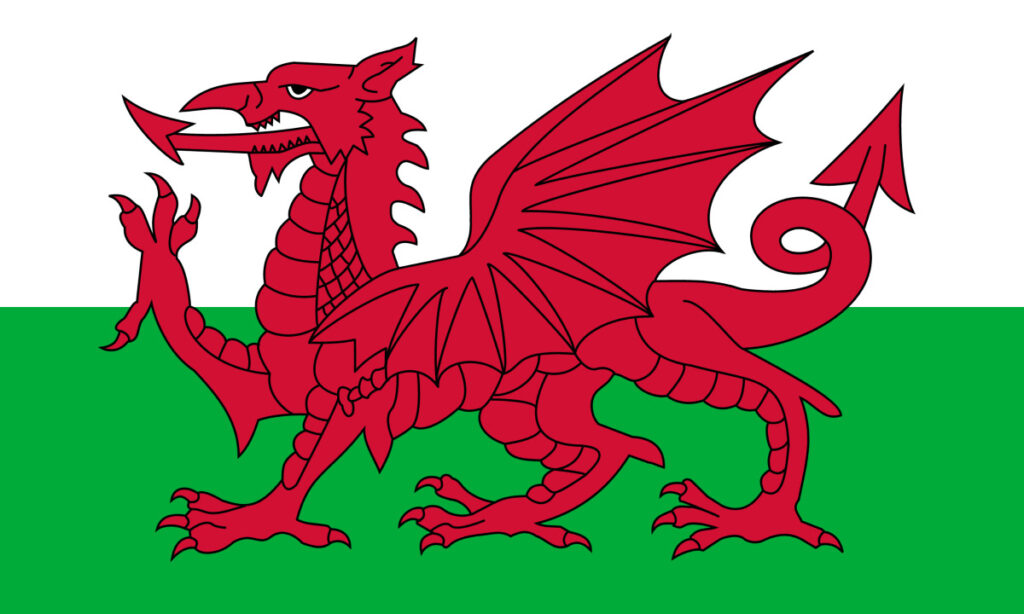
- Wales: The national flag of Wales features a red dragon (Y Ddraig Goch) stepping across a green and white background. This is an ancient symbol of the Celtic Britons, prophesied in Arthurian legend to defeat the white dragon of the invading Saxons. The green and white background represents the colors of the House of Tudor, the Welsh dynasty that once ruled the English throne.
Griffins and Winged Steeds: European Regional Mythology
On regional and sub-national flags of Europe, medieval heraldry brings a host of legendary hybrid creatures to life.
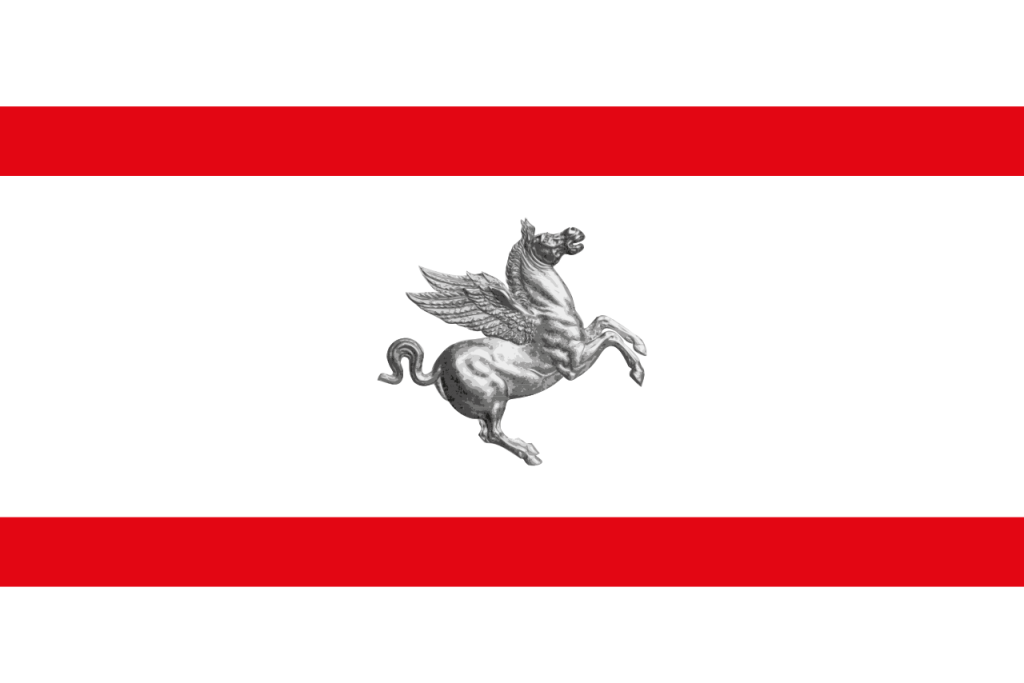
- Tuscany (Italy): The flag of the Italian region of Tuscany features a silver Pegasus (a winged horse) rearing up between two horizontal red stripes on a white background. Pegasus is rooted in ancient Greek and Etruscan mythology as a symbol of freedom and resistance during World War II.
- Skåne County (Sweden): While the broader region of Scania is known for its Nordic Cross flag, the flag of Skåne County features a mythical hybrid: a red Griffin’s head on a golden background. With the beak of an eagle and the ears of a lion, this crowned griffin was originally granted to the city of Malmö in 1437 by the King of Pomerania; it represents intelligence and physical power.
Water Spirits and Goddesses
While mermaids are often seen as tragic figures or dangerous sirens in European fairy tales, on flags, they are displayed on flags as powerful goddesses of the water.
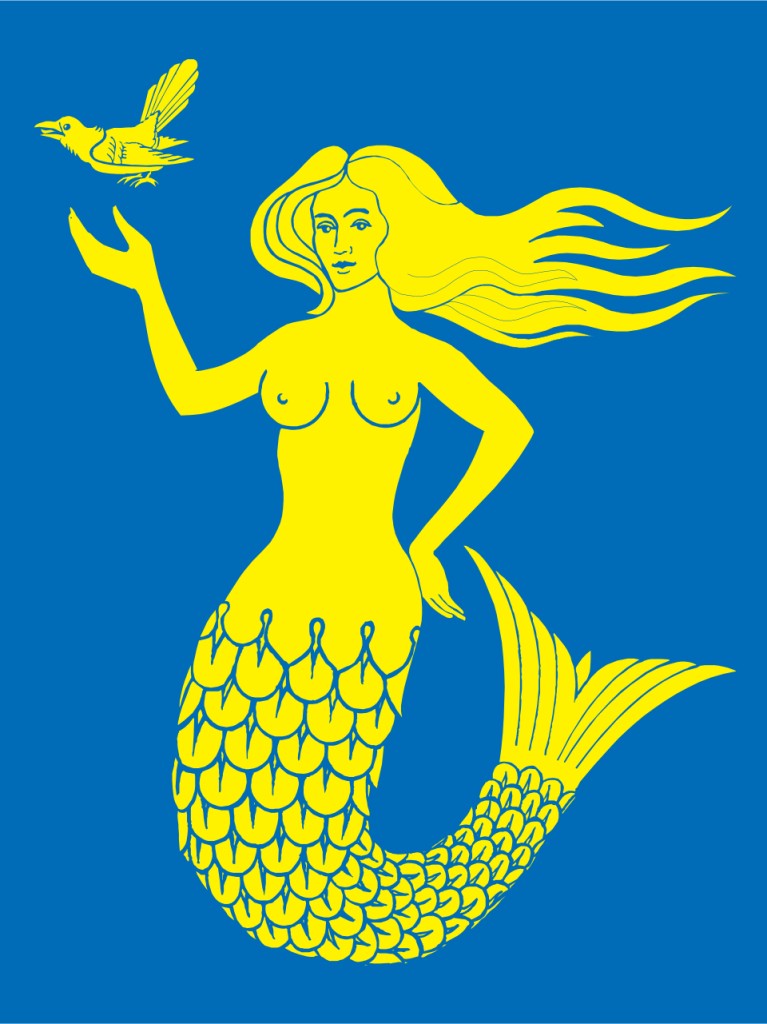
- Päijät-Häme (Finland): The flag of this Finnish region features a golden mermaid on a dark blue background, holding a golden bird in her hand. This is Vellamo, the water goddess of Finnish mythology. She is the protector of lakes and fishermen, and the bird she holds is a cuckoo, representing the region’s connection to nature and ancient folk poetry.
The Winged Lions of the Adriatic
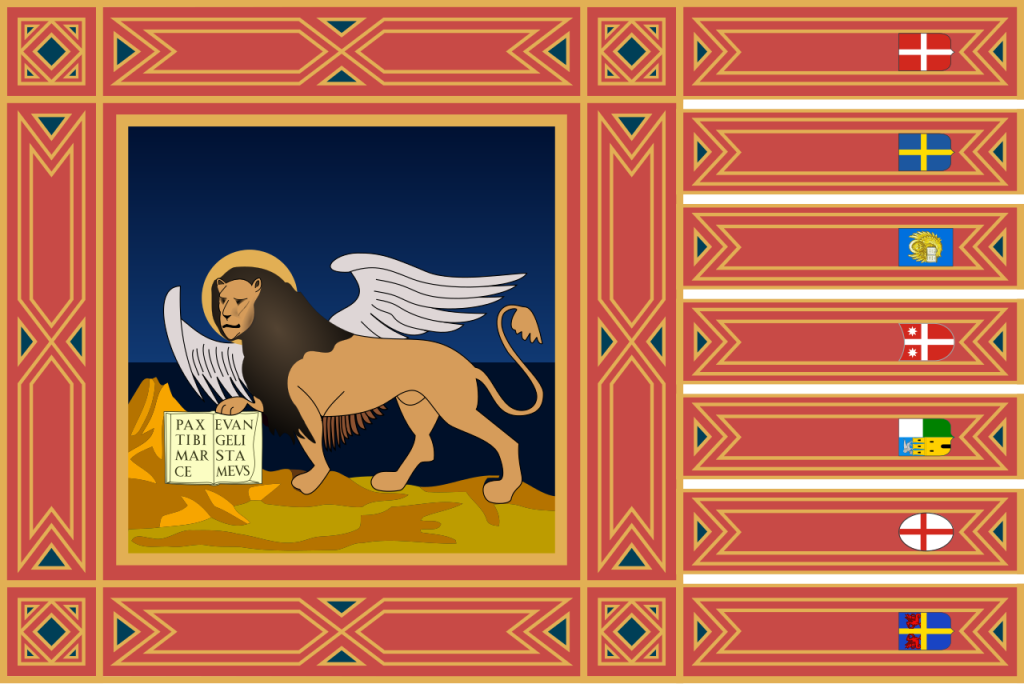
Sometimes a mythical creature is so powerful it represents not just a city, but a centuries-old maritime empire.
- Veneto (Italy): The flag of the Italian region of Veneto is one of the most intricate flags in the world. Its centerpiece is the Winged Lion of St. Mark, resting its paw on an open book. This mythical beast flew on the banners of the ancient Republic of Venice as an intimidating symbol of wealth and naval supremacy across the Mediterranean.
Gorgons and Antiquity
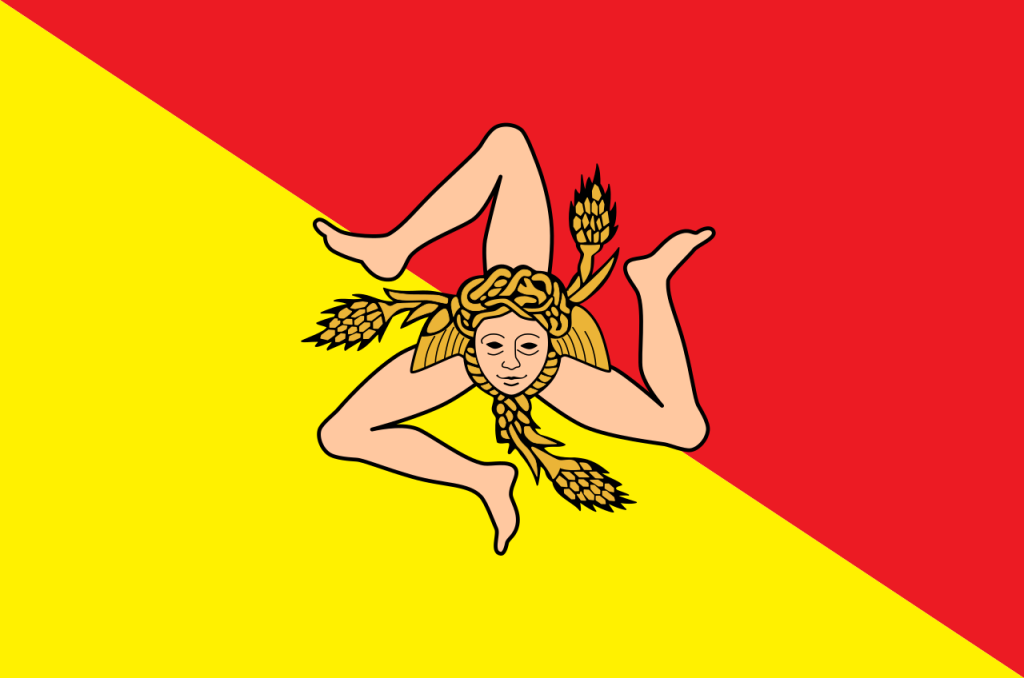
When regional flags reach all the way back to ancient Greek and Roman mythology, the creatures they feature can look otherworldly to modern eyes.
- Sicily (Italy): The red and yellow diagonally divided flag of Sicily features the ‘Triskelion’ three running legs with the head of Medusa, the famous Gorgon from Greek mythology. Instead of her terrifying snake hair, this Medusa has stalks of wheat, symbolizing Sicily’s role as the incredibly fertile “breadbasket” of the ancient Roman Empire.
Wyverns and Eastern Folklore
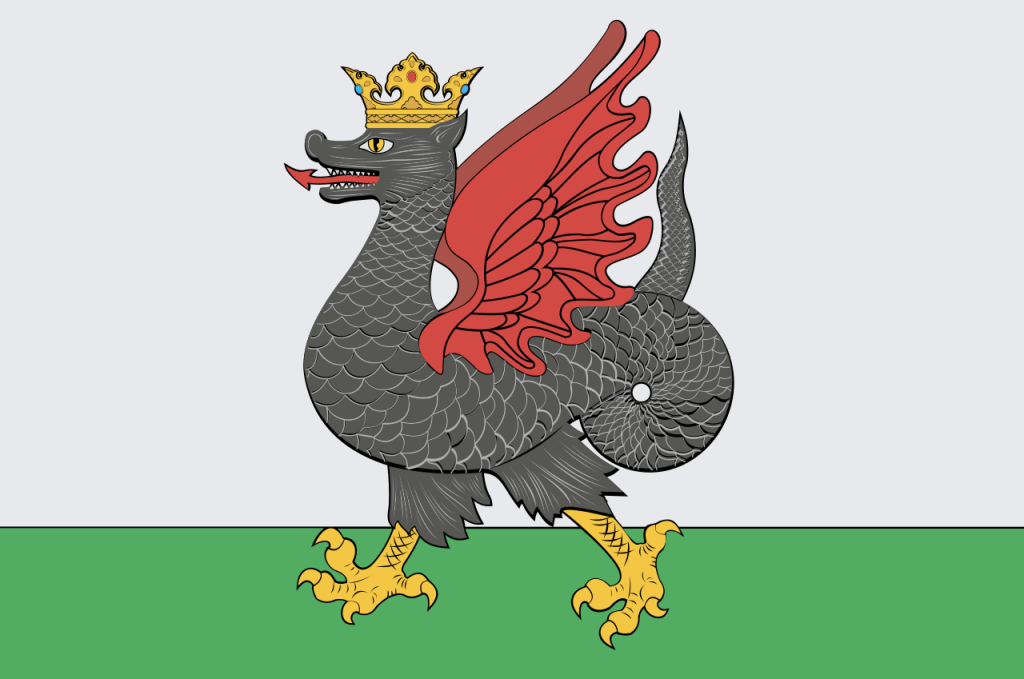
In Eastern Europe and the edges of Asia, local folklore offers variations of dragons that are distinct from their Western counterparts.
- Kazan (Russia): The capital city of the Republic of Tatarstan flies a flag divided horizontally into white and green. Standing in the center is the Zilant, a creature from Tatar mythology. This dragon-like beast features the body of a reptile, the wings of a bird, and a prominent golden crown. According to legend, it originally terrorized the area but was eventually tamed to become a supernatural protector of the city.
What Mythological Creatures Tell Us About a Nation
Choosing a mythical creature for a flag is to embrace storytelling. It shows that a nation or region values its folklore and origins just as much as its modern political history. Whether it is the Thunder Dragon guarding the Himalayas or a sword-wielding mermaid protecting the Vistula River, these flags prove that legends never truly die, they just get raised on flagpoles.
Want to learn more about the incredible history behind the world’s most unique flags? Watch our video playlist below!
Flag designs are used for educational purposes under fair use. Sources include public domain and freely licensed content, except: https://commons.wikimedia.org/wiki/File:Flag_of_Tuscany.svg by Angelo Romano is licensed under the Creative Commons Attribution-Share Alike 3.0 Unported license. https://commons.wikimedia.org/wiki/File:P%C3%A4ij%C3%A4t-H%C3%A4me.lippu.svg by Fenn-O-maniC is licensed under the Creative Commons Attribution-Share Alike 3.0 Unported license. https://commons.wikimedia.org/wiki/File:Flag_of_Veneto.svg by F l a n k e r is licensed under the Creative Commons Attribution-Share Alike 3.0 Unported license.