
Because human beings are difficult to draw and reproduce consistently on waving fabric, they are rarely used. Some flags do feature full human bodies, historical faces and even disembodied limbs, These flags tell specific cultural stories that simple geometric bands, stripes or stars never could. Let’s explore the “flag family” that features people and human anatomy.
Full Figures: The Workers and the Saints
It’s quite rare to see full human bodies on a flag. When they do appear, they usually honor the foundational workers who built the local economy or the patron saints who protect the land.
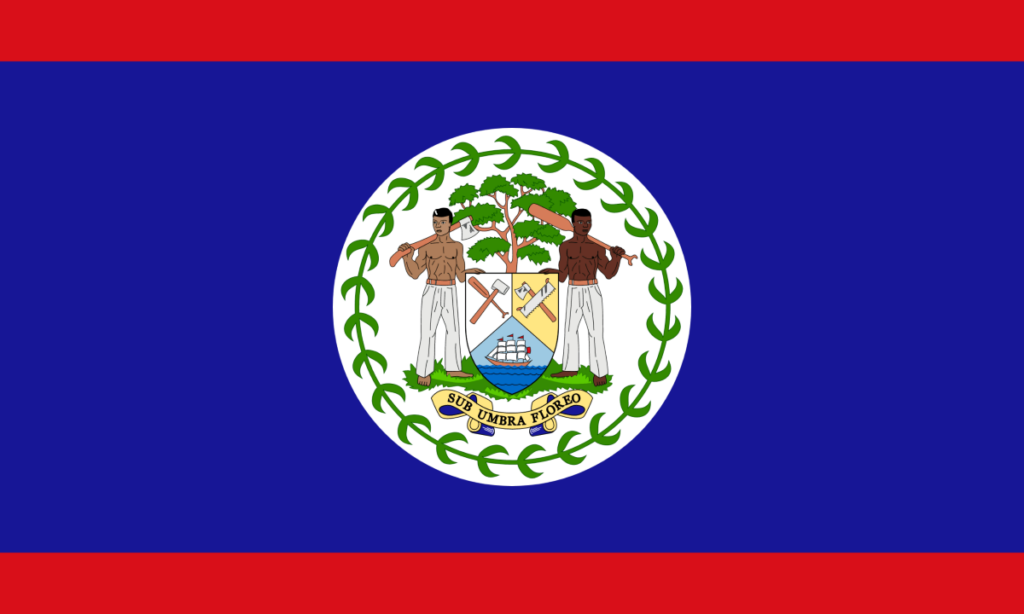
- Belize: Belize holds the distinction of being the only independent UN-recognized nation to feature humans as the main focal point of its flag. The central coat of arms depicts two woodcutters standing on either side of a mahogany tree. One man of Mestizo descent holds an axe, and the other of African descent holds an oar. They represent the multiracial fabric of the nation and the historic mahogany logging industry that built its economy.
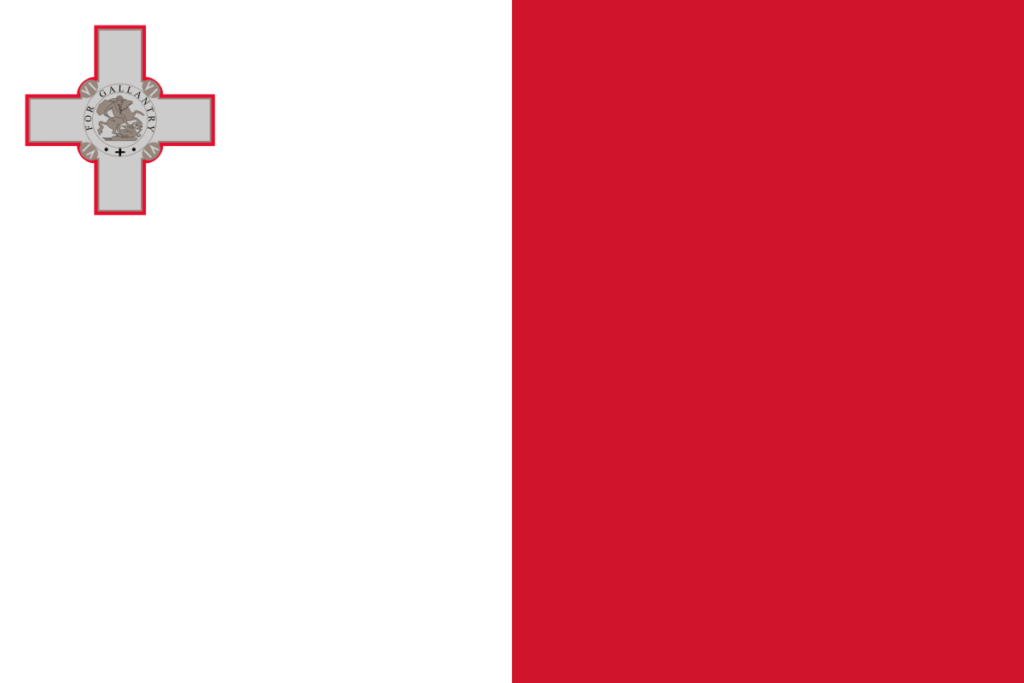
- Malta: It might require a magnifying glass to spot, but the upper corner of the Maltese flag displays the George Cross, a medal for gallantry awarded to the island by King George VI during World War II. In the center of this cross is an engraving of Saint George on horseback slaying a dragon.
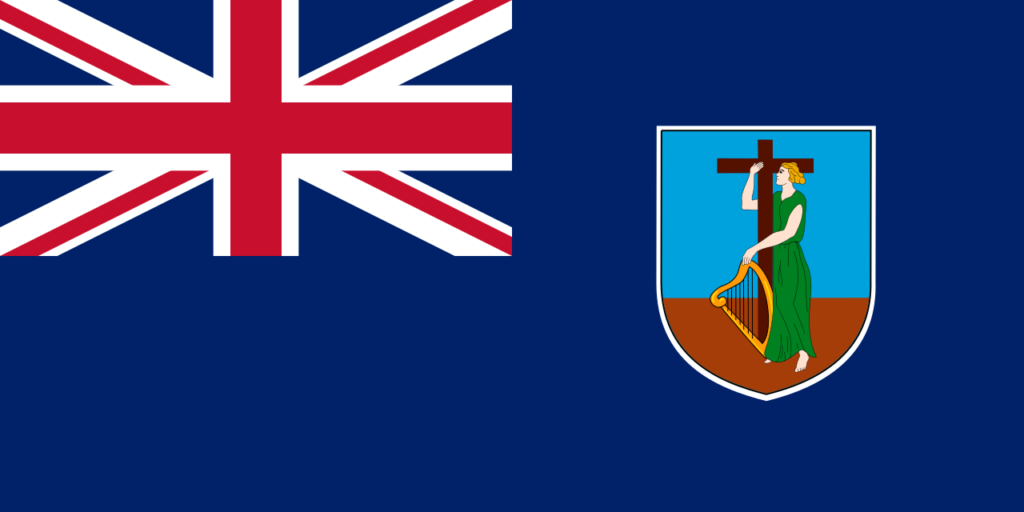
- Montserrat: The flag of this British Overseas Territory in the Caribbean features a woman dressed in green holding a golden harp and a cross. This figure is Erin, the traditional female personification of Ireland. She was placed on the flag to honor the Irish ancestry of its early settlers.
- British Virgin Islands: Another British territory, this flag features a woman in a white dress holding a glowing golden oil lamp, surrounded by 11 other lamps on a green field. This figure represents Saint Ursula. According to legend, Christopher Columbus named the islands after Saint Ursula and her 11,000 virgin followers.
Heads and Faces: The Moor’s Head
Rather than full bodies, some of the most famous regional flags in the Mediterranean focus on disembodied human heads, rooted in medieval European history.
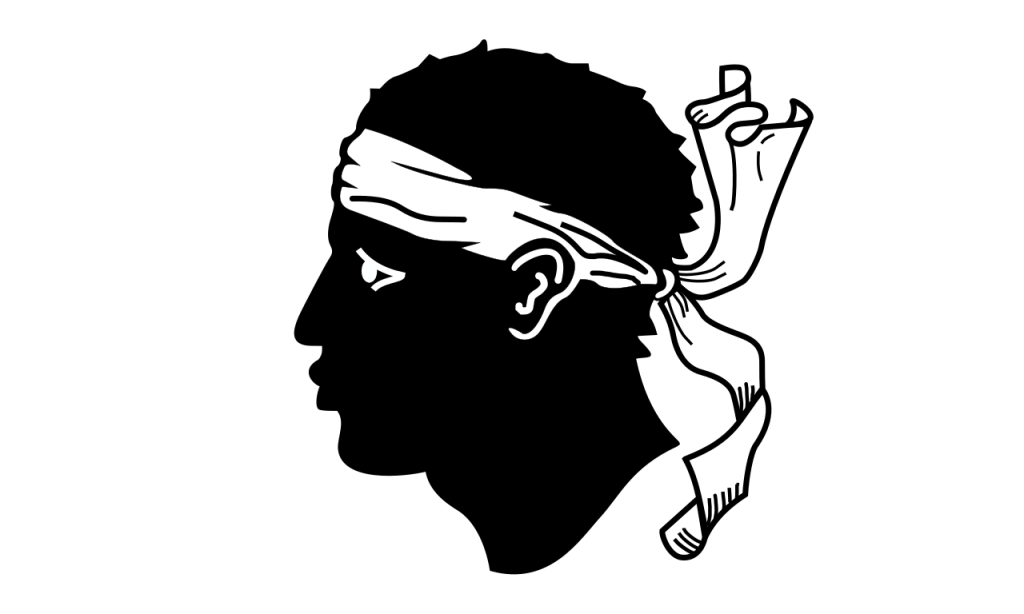
- Corsica (France): The flag of this French island features a black silhouette of a human head (Tête de Maure, or Moor’s Head) in profile on a white background. The figure wears a bandana tied across his forehead. Originally an Aragonese symbol representing the defeat of Moorish invaders, the bandana was historically drawn over the eyes. Corsican general Pasquale Paoli later moved the bandana to the forehead to symbolize liberation and awakening of its people.
- Sardinia (Italy): Just south of Corsica, the Italian island of Sardinia flies the Bandiera dei Quattro Mori (Flag of the Four Moors). A red cross divides the flag into quarters, with each quadrant containing a Moor’s head, complete with the same white bandana tied across the forehead.
Hands and Limbs: Triskelions and Open Palms
Perhaps the most visually surprising category of human anatomy on flags is the use of isolated arms and legs. These limbs are often tied to ancient symbols of endurance or legendary myths of conquest.
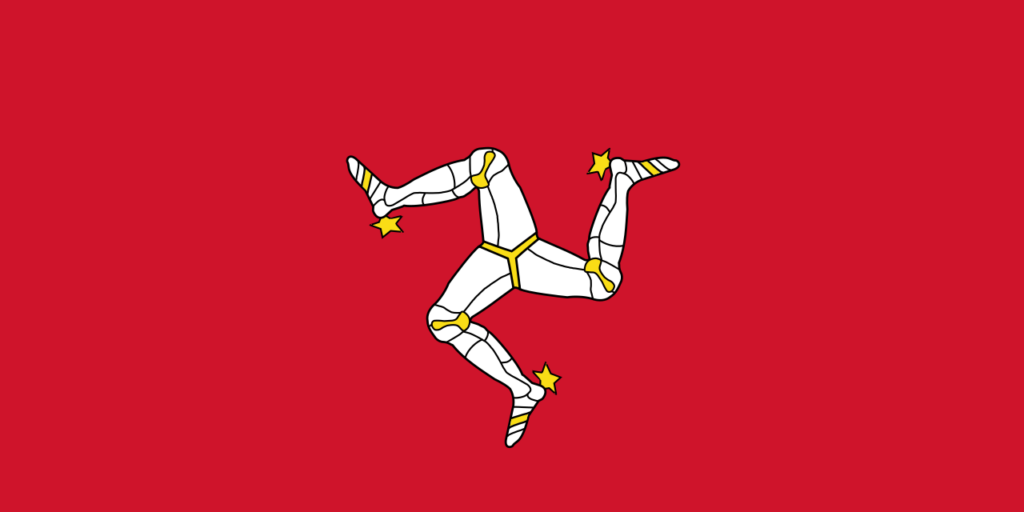
- Isle of Man: The red flag of this British Crown Dependency features a triskelion at its center. This symbol is of three armored human legs, complete with golden spurs, bent at the knee and joined at the thigh. It echoes the island’s defiant motto: “Whichever way you throw it, it will stand.”
- Abkhazia: The flag of this region in the South Caucasus features a red canton in the upper left corner with an open white right hand pointing upward. This ancient Abkhazian symbol of statehood serves a dual purpose: offering a gesture of welcome and peace to guests, while also acting as a “stop” sign and a warning to enemies.
State Seals on Bedsheets: The US State Flags
Many U.S. State flags feature a complex state seal resting on a solid background, a design style affectionately called a “seal on a bedsheet.” These seals, designed in the 18th and 19th centuries, represent local industries and foundational ideals, they are absolutely packed with human figures.
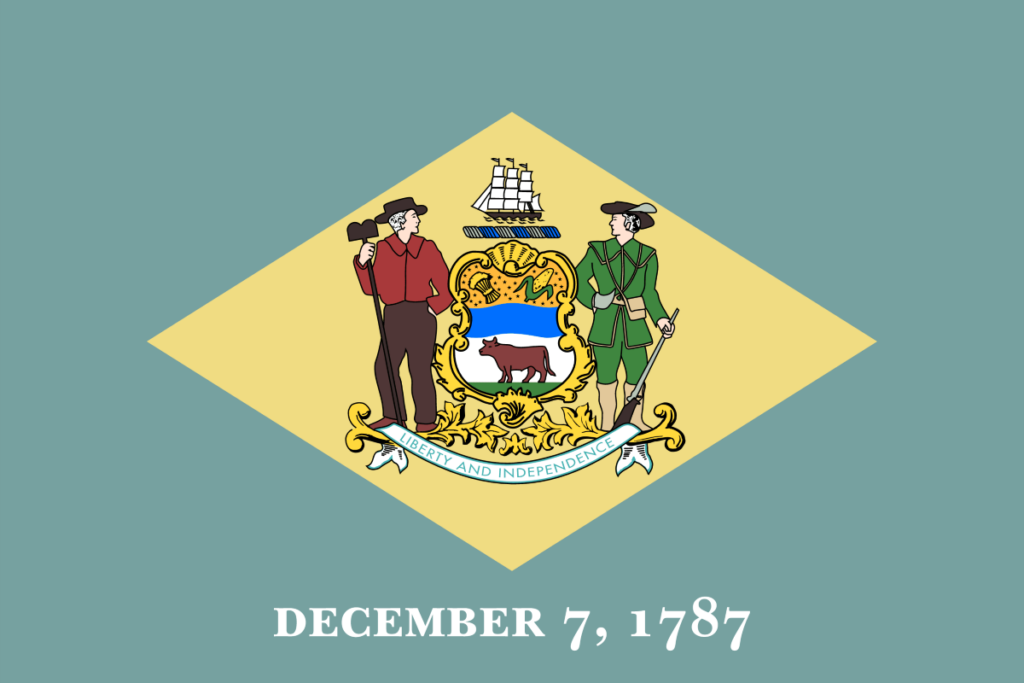
- Delaware: The diamond-shaped coat of arms on Delaware’s flag is supported by two human figures representing the state’s early economy and defense. On the left stands a farmer holding a hoe, and on the right, a Revolutionary War soldier with a musket. Together, they represent the agricultural backbone of the state and its role as the first state to ratify the US Constitution.
- Virginia: The central sea on the flag of Virginia features Virtus (the Roman goddess of bravery and military strength) dressed as an Amazon warrior, standing triumphantly with a spear. Beneath her foot lies a defeated man representing Tyranny, whose crown has fallen to the ground. It is a literal depiction of the state’s motto: Sic Semper Tyrannis (Thus always to tyrants).
- Washington: The flag of Washington takes a different approach. It is the only US state flag to feature an actual, recognizable face of a specific historical person, President George Washington looking back at the viewer from the center of a dark green field.
Look closely at the state flags of Florida, Georgia, Idaho, Kansas, Kentucky, Maine, Massachusetts, Michigan, Nebraska, New Jersey, New York, South Dakota, West Virginia and Wisconsin. On these you will find indigenous peoples, sailors, miners and crowds of pioneers.
What Human Figures Tell Us About a Nation
Flags with human bodies or limbs don’t just represent abstract concepts like “freedom” or “courage”; they tell stories. From a woodcutter holding an axe, an armored leg refusing to fall, or a saint holding a lamp, human figures transform a standard flag into a waving history book.
Want to learn more about the incredible history behind the world’s most unique flags? Watch our video playlist below!