
The sun is arguably the most universal symbol in human history. It represents life, vitality, warmth, dawn, and spiritual enlightenment. Solar imagery has guided human civilizations for thousands of years.
In vexillology, suns form a dynamic “flag family.”. While some nations opt for minimalist, solid circular discs, others feature bursts of rays and ocean horizons. Let’s explore the world flags that incorporate the sun into their designs.
Minimalist Discs: The Solar Spheres
These flags strip away the rays entirely, representing the sun as a pure, bold circle.
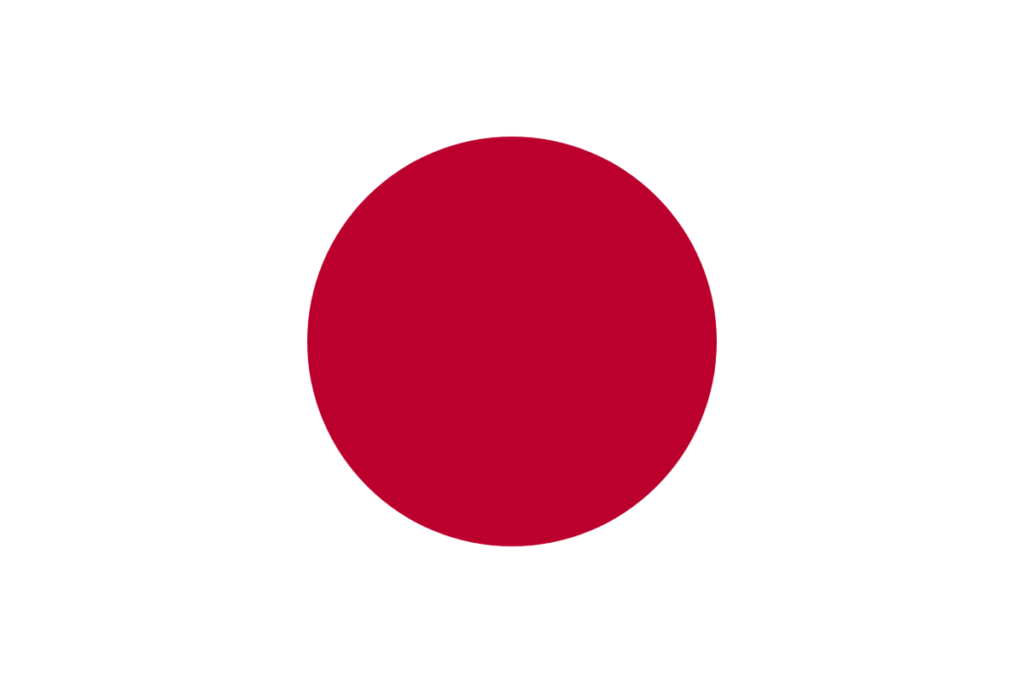
- Japan: Known as the Nisshōki (sun-mark flag) or Hinomaru (circle of the sun), the national flag of Japan features a bold crimson disc on a stark white field. Japan’s identity as the “Land of the Rising Sun” is encapsulated in this design.
- Bangladesh: Featuring a red disc slightly shifted toward the hoist over a lush green field, the flag of Bangladesh uses the sun to tell a story of renewal. The red circle represents the rising sun over Bengal, as well as the blood shed by those who fought for the nation’s independence in 1971.
- Greenland: The flag of Greenland (Erfalasorput) features two equal horizontal bands of white and red with a split counter-changed circle. The lower red half of the circle represents the sun dipping below or rising above the horizon, casting its glow over the polar ice cap.
Radiant Rays: Freedom, Power, and New Beginnings
When flags feature stylized rays spreading outwards, they typically symbolize national rebirth, energy, and territorial unity.
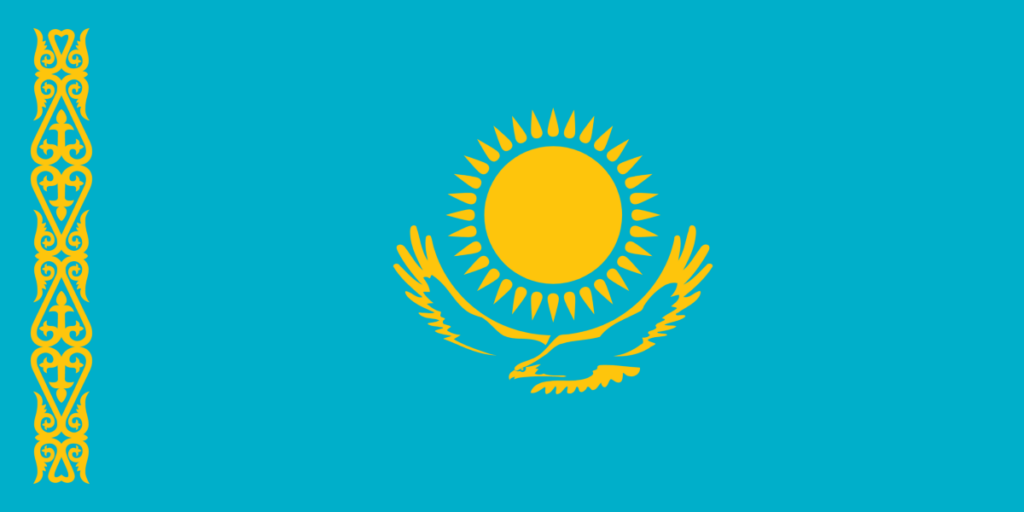
- Kazakhstan: The sky-blue national flag of Kazakhstan features a golden sun in the center with 32 grain-shaped rays, below the sun is a steppe eagle. It represents life, energy and the warmth of the steppe, its rays evoke grain, the foundation of Kazakhstan’s agricultural wealth..
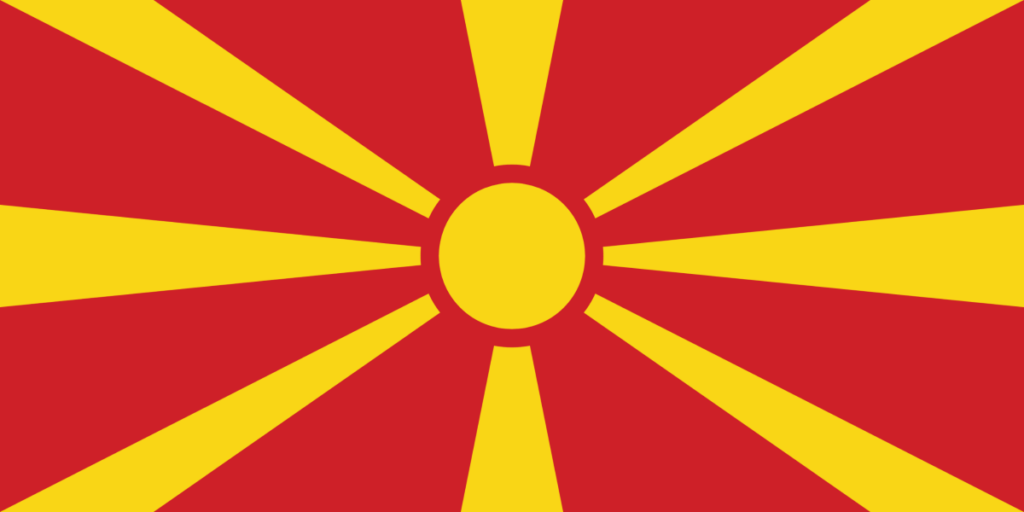
- North Macedonia: The flag features a yellow sun in the center, extending eight spreading rays out to the edges of a bright red field. It is inspired by the opening words of the national anthem: “Today over Macedonia, is being born the new sun of liberty.”
- The Philippines: The white equilateral triangle on the hoist of the Philippine flag has a golden sun with eight primary rays. Each ray represents one of the initial eight provinces that rose in rebellion against the Spanish Empire in 1896.
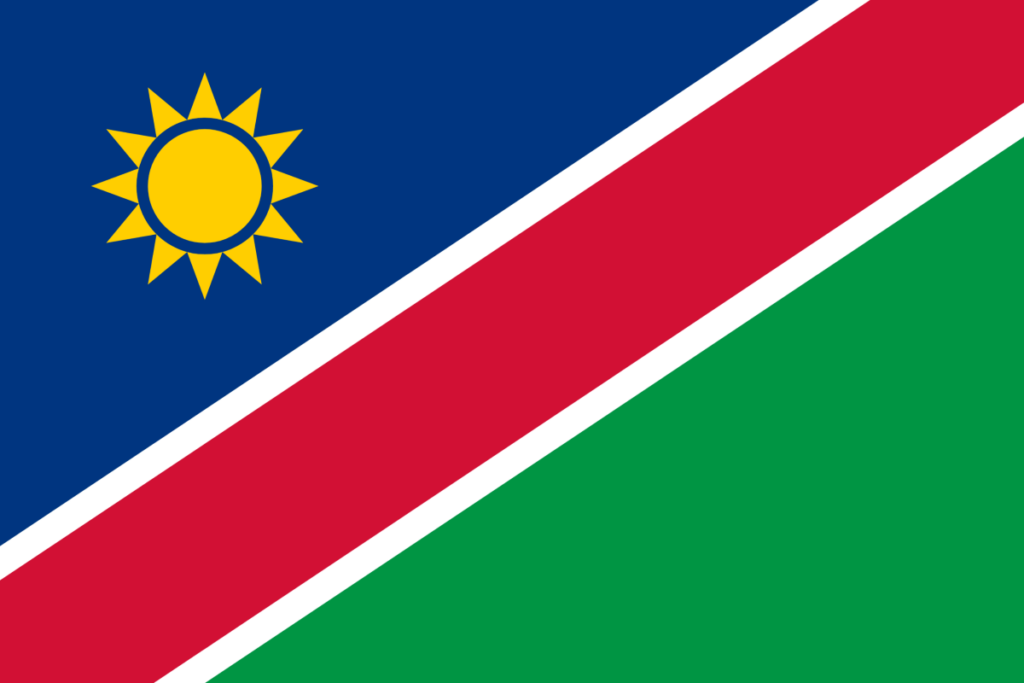
- Namibia: The blue triangle in the upper hoist corner of Namibia’s flag contains a golden-yellow sun with 12 triangular rays. The sun represents life, energy and the country’s climate, the 12 rays symbolize the ethnic groups that make up the Namibian people.
- Rwanda: In the upper right (fly) corner of Rwanda’s green, yellow, and blue tricolor shines a bright golden sun with 24 rays. It represents the light that illuminates the people casting away darkness and division following national reconciliation.
Rising Horizons: Dawn Over Land and Sea
Several island and coastal nations capture the literal moment of sunrise, using the horizon to represent a fresh start after colonial rule.
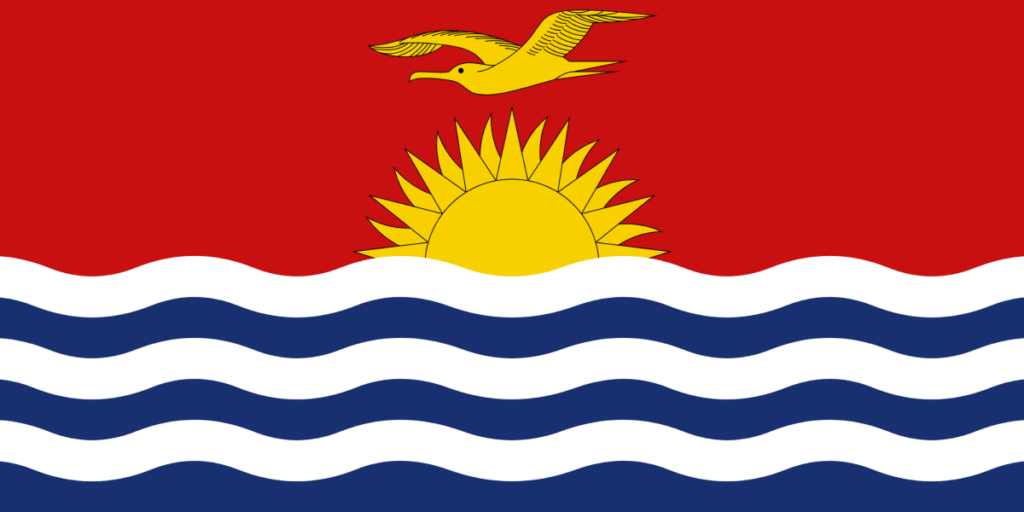
- Kiribati: One of the most scenic flags in vexillology, Kiribati features a golden frigatebird flying above a golden sun rising over three sets of wavy blue and white stripes. The waves represent the Pacific Ocean, while the rising sun symbolises the equator cutting across the country’s three vast island chains.
- Antigua and Barbuda: Centered inside a red “V” for victory, the flag depicts a seven-pointed golden sun rising against a black sky over blue and white bands. The rising sun heralds the dawn of a new era of freedom following independence.
- Malawi: The flag of Malawi features a rising sun with 31 rays on its top black band. This rising sun signifies the dawn of hope and freedom for the continent of Africa when the nation gained independence in 1964.
The Mythical Faces: The Sun of May
Flags in South America personify the sun by giving it a distinct human face, linking post-colonial independence directly to indigenous mythology.
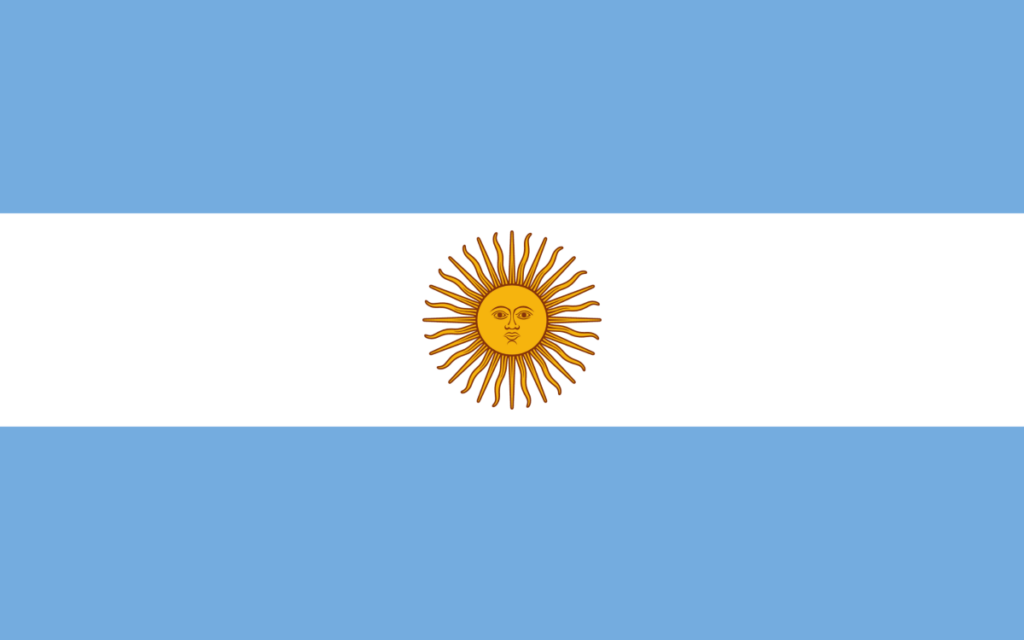
- Argentina: The center of Argentina’s white horizontal band displays the Sol de Mayo (Sun of May). Featuring a stoic face framed by 32 alternating straight and wavy rays, the emblem pays homage to Inti, the ancient Incan god of the sun, commemorating the May Revolution of 1810.
- Uruguay: In the canton of Uruguay’s blue-and-white striped banner sits its own Sol de Mayo. Uruguay’s sun features 16 alternating rays (eight straight, eight wavy) with an expressive face, similarly honoring the shared revolutionary spirit and Incan solar heritage of the Río de la Plata region.
What Suns Tell Us About a Nation
Whether shining as an abstract disc of crimson, rising over oceanic waves, or beaming with golden rays of independence, solar emblems carry an inherent optimism. They declare that no matter how turbulent a nation’s past may have been, each day brings a new dawn, warmth, and enduring life.
Want to learn more about the incredible history behind the world’s most unique flags? Watch our video playlist below.