
Geography shapes a nation, and for countries built on rugged terrain, mountains are much more than just a backdrop. They are natural fortresses and symbols of national endurance. While many flags use green colors to represent the land, this “flag family” proudly features mountain peaks on their banners.
Whether depicted through highly detailed literal drawings or bold, abstract geometry, these flags honor the high ground. Let’s ascend and explore the world’s most mountainous flags.
The Literal Peaks: European Iconography
For several European nations, a specific mountain range is so central to their cultural identity that it takes center stage on their coat of arms and flag.
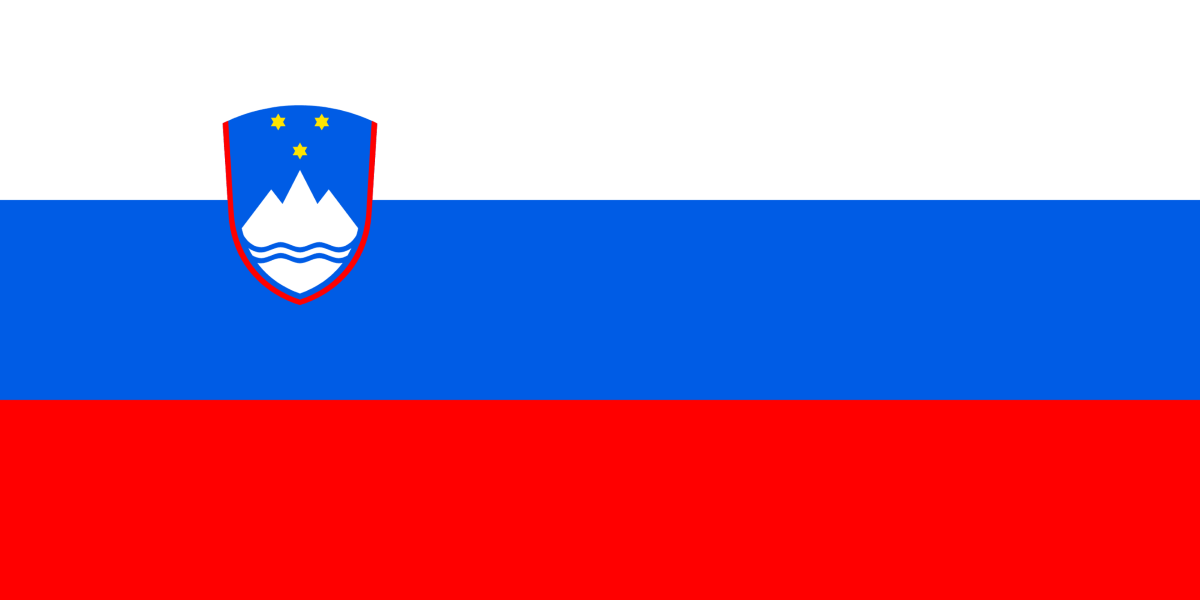
- Slovenia: The upper left corner of the Slovenian flag features its national coat of arms. The focal point of this crest is a white, stylized drawing of Mount Triglav, the highest peak in Slovenia and a powerful national symbol. The three six-pointed stars above the mountain represent the historical Counts of Celje, the wavy blue lines beneath represent the country’s rivers and the Adriatic Sea.
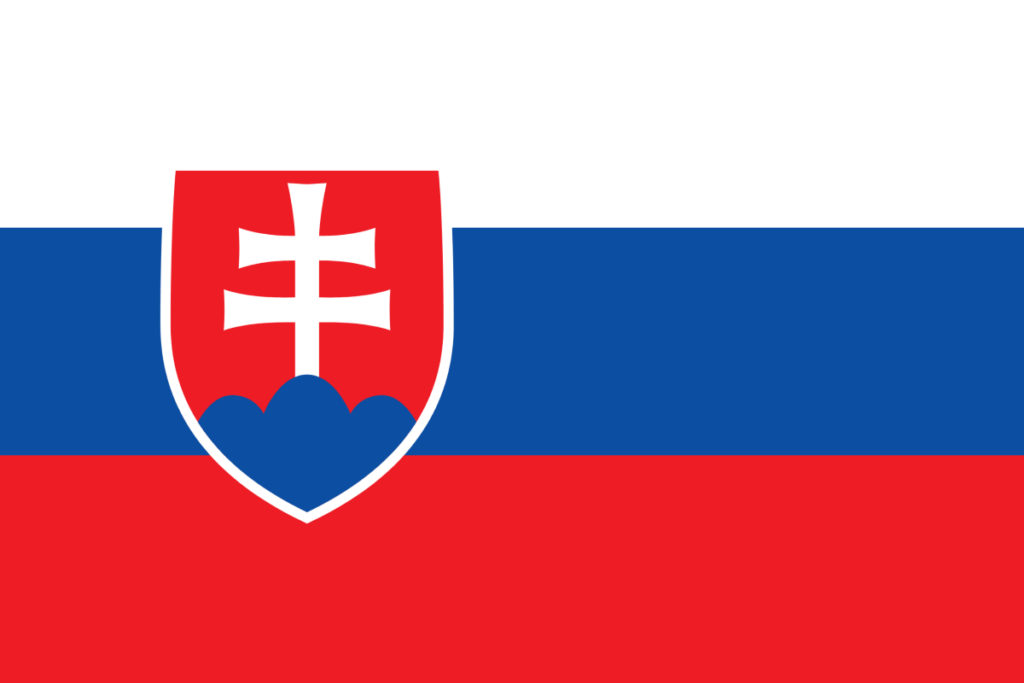
- Slovakia: The flag of Slovakia bears a coat of arms featuring a white double cross planted firmly on three elevated blue peaks. They represent the Tatra, Fatra and Mátra mountain ranges. Though the Mátra range is now located in modern-day Hungary, the three peaks remain a historic symbol of the lands that formed the Slovak nation.
The Volcanic Isthmus: Central America
In Central America, mountains frequently appear in the form of volcanoes, honoring both the region’s explosive geology and its shared political history.
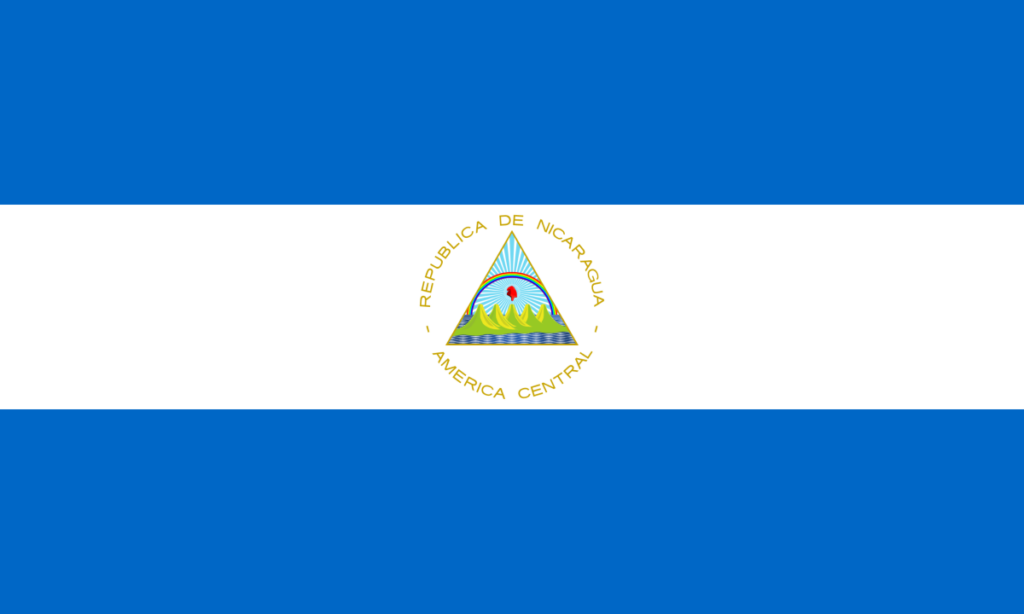
- Nicaragua and El Salvador: Both of these nations feature a very similar central coat of arms on a blue and white background. Inside a triangle, five green volcanoes rise out of the ocean beneath a Phrygian cap of liberty. These five volcanic peaks do not represent specific mountains; instead, they represent the five original member states of the historic United Provinces of Central America, sitting solidly between the Pacific Ocean and the Caribbean Sea.
Representational Peaks: Abstract Geography
Not all mountains on flags are drawn literally. Some flags in the world use pure geometry to represent their famous peaks, proving that abstract shapes can tell a powerful geographic story.
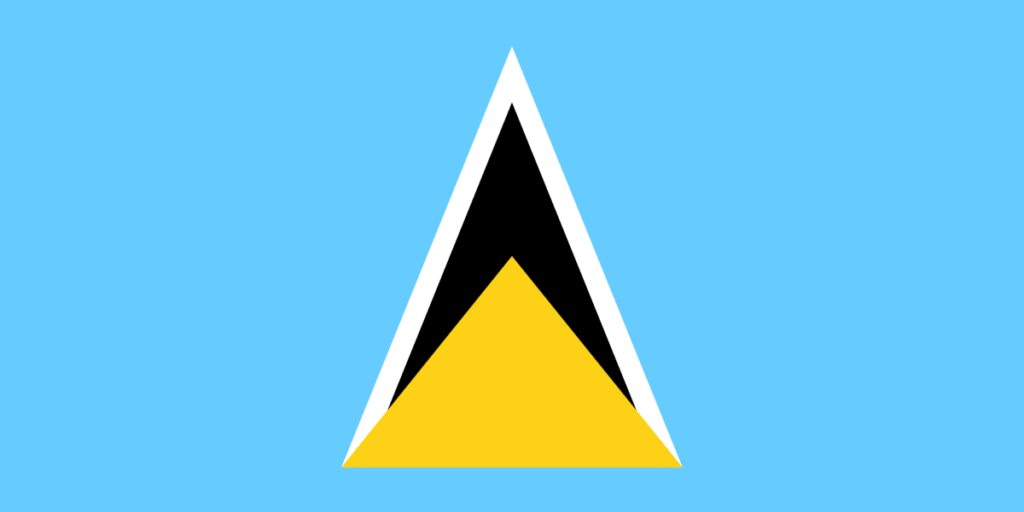
- Saint Lucia: The flag of this Caribbean island nation features a towering central design made of a yellow triangle sitting in front of a taller black and white isosceles triangle. These aren’t arbitrary geometric shapes, they are representations of the Pitons, two massive, iconic volcanic plugs that rise dramatically out of the ocean on the island’s southwestern coast.
- Nepal: Nepal breaks the rules of vexillology by abandoning the rectangular shape entirely. Instead, the flag consists of two stacked triangles. While these points carry religious meaning, their physical, jagged shape is purposefully designed to represent the towering peaks of the Himalayas, mirroring the country’s skyline.
State Level Summits: The US State Flags
When looking at regional flags within the United States, mountains are an incredibly common motif, honoring the nation’s diverse topography and westward expansion.
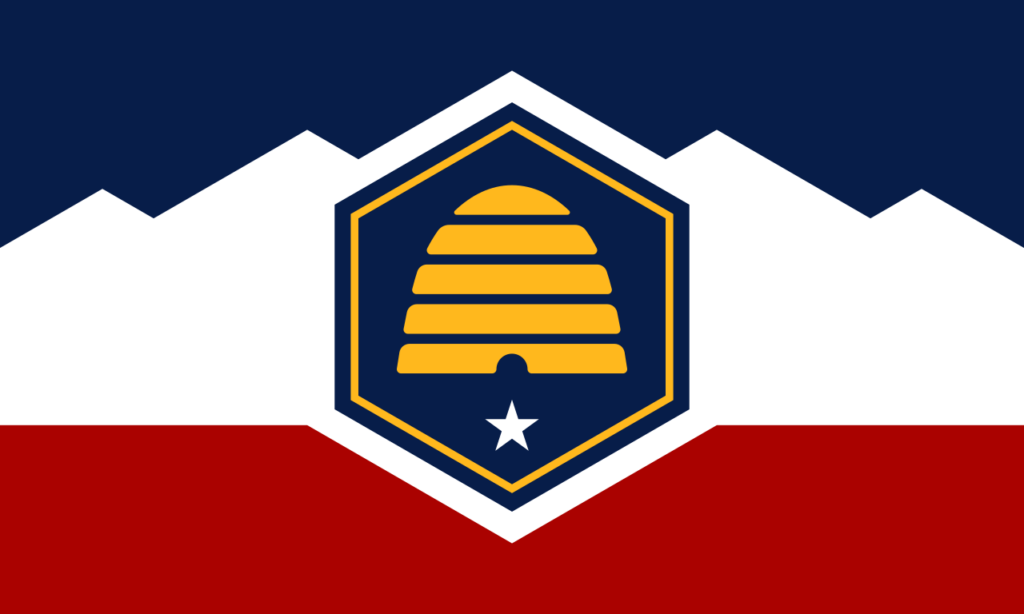
- Utah: The recently adopted “Beehive Flag” of Utah uses a geometric design to map its landscape. The flag is divided horizontally by a white band with a sharp, jagged top, which serves as an abstract view of the state’s snow-capped mountain peaks. This jagged line sharply divides the blue sky above from the canyons below.
- Other US states feature detailed drawings of mountains inside their state seals or coats of arms placed on their flags. Montana features the Rocky Mountains, the Vermont flag shows the Green Mountains. The flags of Idaho, Oregon, Kansas and Nebraska feature agricultural scenes with mountain peaks on the horizon, and New York includes the Hudson Highlands.
What Mountains Tell Us About a Nation
When a country places a mountain on its flag, it is projecting strength and permanence. Mountains cannot be moved or conquered and they provide a vantage point over the rest of the world.
Whether it is a literal drawing of Mount Triglav or the abstract triangles of Saint Lucia, Nepal and Utah, these flags declare that a nation’s spirit is as unshakeable as the rock it is built upon. Want to learn more about the history behind the world’s most unique flags? Watch our video playlist below!