

There is a uniformity shared by most flags – almost every single one is a rectangle. While the proportions might vary slightly, usually 2:3 or 1:2, the basic four-sided shape is a globally accepted standard in vexillology.
A small, rebellious “flag family” however makes a bold design statement by refusing to conform to this standard. These flags break the rectangular mold, opting for squares, triangles, and swallowtails. Let’s explore the most famous geometric rule-breakers in the world of flags.
Nepal: The Double Triangle
The undisputed king of non-rectangular flags belongs to Nepal. It is the only national flag in the world that is not a quadrilateral. Instead of a rectangle, the flag of Nepal consists of two stacked triangles (a non-quadrilateral pennon) outlined in a bold blue border.
Geographically, the towering peaks of the triangles represent the Himalayan mountains. Culturally and religiously, the two points represent Hinduism and Buddhism, the two major religions of the nation. While other countries have modernized their ancient, irregularly shaped banners into standard rectangles, Nepal has proudly kept its traditional design.
Switzerland and Vatican City: The Perfect Squares

While technically quadrilaterals, Switzerland and Vatican City are the only two recognized sovereign states in the world that use a square (1:1 proportion) flag.
- Switzerland: The Swiss flag design originates from the military banners used by the Swiss Confederacy during the medieval period. Because military field signs of that era were traditionally square, Switzerland simply kept the exact dimensions when adopting it as their national flag.
- Vatican City: The smallest independent state in the world also flies a square flag, divided vertically into yellow and white halves, with the Papal Tiara and crossed keys on the right. Like Switzerland, this shape is deeply rooted in historical medieval traditions.
Ohio: The Swallowtail Burgee
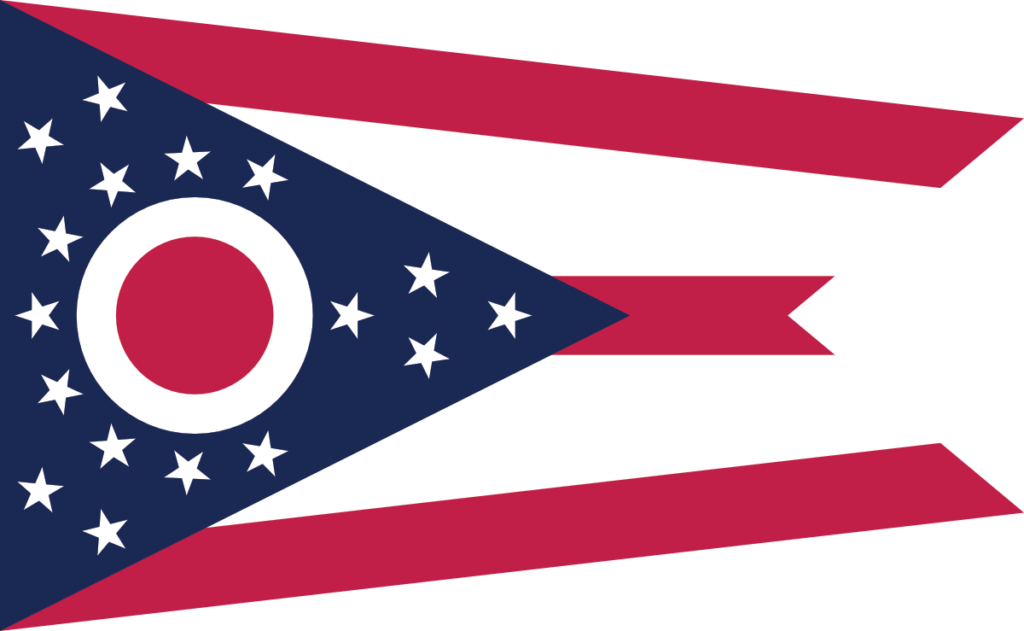
Looking beyond national flags, the US State of Ohio stands out as an iconic rule-breaker. Adopted in 1902, the flag of Ohio is a swallowtail pennant, technically known as a burgee.
Designed by John Eisemann, the unique tapering shape with a v-shaped cutout at the end was inspired by the pennants flown by cavalrymen and the flags used on boats navigating the state’s rivers and lakes. The large blue triangle represents Ohio’s hills and valleys, while the stripes represent its roads and waterways.
European Exceptions: Slovak and Polish regions
Stepping away from national flags, non-oblong shapes are actually a strict design requirement in some flags of Central and Eastern Europe.
- Slovakia: With an interesting system for its local flags, many city flags in Slovakia including Bratislava are swallowtails. To easily distinguish regional flags, Slovakian cities use a standard two-pointed swallowtail, while rural communities use a double-swallowtail featuring three points.
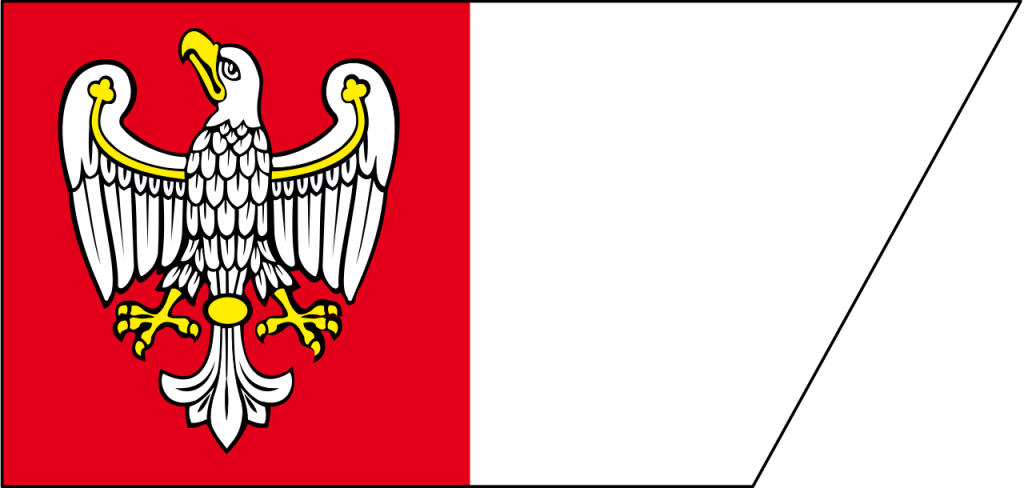
- Poland: Some Polish regions use a trapezoid shape. The official flag of the Greater Poland Voivodeship (Region) features a diagonal trapezoidal cut at the fly end. Designed to mirror the historical banners of 16th-century Polish lands, this flag tapers off instead of maintaining a rigid rectangular border.
Why Break the Rules?
Standardization in flags largely came from naval traditions, rectangular flags fluttered best on the back of ships and were easy to mass-produce. But the nations and states that break these rules remind us that flags are much older than modern standardization.
When a flag defies the standard rectangle, it is a proud declaration of ancient heritage, preserving a piece of history that refused to be boxed in. Want to learn more about the incredible history behind the world’s most unique flags? Watch our video playlist below!